
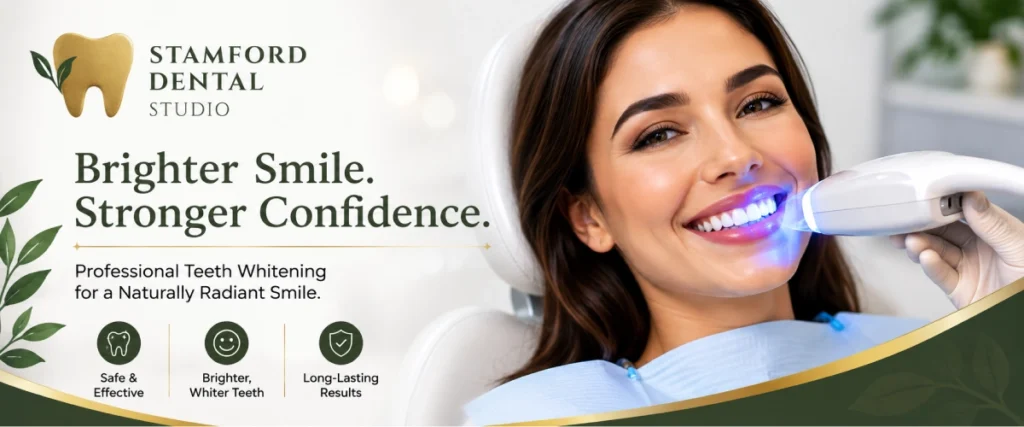
If your teeth have become yellow or stained, you have probably seen several ways to make them brighter.
There are whitening strips, whitening toothpaste, take-home trays, professional whitening, and treatments that use a special dental light. With so many choices, it can be difficult to know which option makes sense for you.
Two common approaches people ask about are laser teeth whitening and traditional teeth whitening.
Both can improve the appearance of natural teeth, but they are not exactly the same. The treatment process, convenience, supervision, cost, and expected results can vary.
So, which is better?
The answer depends on your teeth, your goals, your sensitivity, and how quickly you want to see a change.
What Is Laser Teeth Whitening?
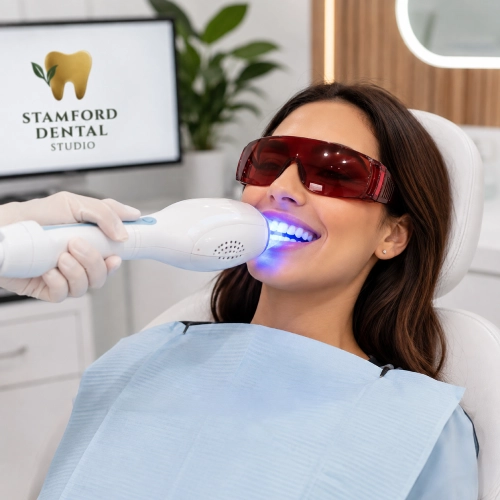
Laser teeth whitening generally refers to professional whitening performed in a dental office, sometimes using a special light along with a professional whitening gel.
The whitening gel usually contains a peroxide-based ingredient. Hydrogen peroxide and carbamide peroxide are commonly used in professional and at-home whitening products.
The peroxide works by breaking down colored compounds that cause teeth to look darker.
Some systems also use light activation during treatment.
The exact process depends on the whitening system selected by the dental office.
What Is Traditional Teeth Whitening?
“Traditional teeth whitening” can refer to several different approaches.
For example, traditional whitening may include:
- Whitening strips
- Whitening toothpaste
- Take-home whitening trays
- Professional whitening gel
- Custom dental trays
- Over-the-counter whitening products
Some of these options are performed at home, while others are provided by a dentist.
Because the term “traditional whitening” can mean different things, it is useful to compare professional in-office whitening with home whitening rather than assuming every traditional treatment works the same way.
How Does Professional Laser Whitening Work?
A professional whitening appointment usually starts with an examination.
Your dentist checks your teeth and gums and looks for issues that could affect whitening.
The teeth may then be cleaned or prepared before whitening.
The whitening material is carefully applied to the teeth while the gums are protected.
If the whitening system uses a special light, the light is used during the treatment according to the system’s instructions.
Once the treatment is complete, the whitening material is removed and your dentist checks the result.
This approach allows the dental team to monitor the treatment from beginning to end.
How Does At-Home Whitening Work?
At-home whitening usually takes more time.
For example, whitening strips are placed over the teeth for a specific amount of time. This process is repeated according to the product instructions.
A dentist may also provide custom whitening trays that are designed to fit your teeth.
The whitening gel is placed inside the trays and used according to your dentist’s instructions.
At-home treatment can be convenient because you can use it on your own schedule.
However, it usually takes longer to see the full result compared with many professional in-office treatments.
Laser Teeth Whitening vs. Traditional Whitening
The main differences come down to the treatment setting, supervision, convenience, and speed.
Treatment Setting
Professional laser whitening is performed at a dental office.
Traditional home whitening is usually performed by the patient at home.
For people who prefer professional supervision, in-office whitening may be more appealing.
Treatment Time
Professional whitening is designed to produce a noticeable change during a relatively short treatment period.
At-home whitening usually requires repeated applications over several days or weeks.
The exact time varies by product and treatment plan.
Professional Supervision
With professional whitening, a dentist can examine your teeth before treatment.
This is useful if you have:
- Sensitive teeth
- Gum recession
- Cavities
- Existing crowns
- Veneers
- Fillings
- Previous dental work
At-home products do not provide the same level of professional examination unless they are prescribed or provided by your dentist.
Convenience
At-home whitening gives you more control over when you use the product.
You can whiten your teeth at home while following the instructions provided with the product.
Professional whitening requires a dental appointment, but the treatment itself can be completed in a controlled office setting.
Which Option Gives Faster Results?
If speed is your main concern, professional in-office whitening may be the better option.
Many professional whitening systems are designed to produce visible results during an office visit.
At-home whitening generally takes longer because the treatment is spread over multiple applications.
This can make professional whitening attractive for people preparing for:
- Weddings
- Graduations
- Vacations
- Family photos
- Job interviews
- Special events
However, faster does not always mean better.
The best treatment is the one that fits your teeth and your goals.
Which Option Is Better for Sensitive Teeth?
Sensitivity is one of the most common concerns with tooth whitening.
Some people experience sensitivity during or after whitening. The level of sensitivity varies from person to person.
If you already have sensitive teeth, talk with your dentist before choosing a whitening treatment.
A dental examination can help identify why your teeth are sensitive.
Sensitivity may be related to enamel wear, gum recession, cavities, exposed root surfaces, or other issues.
It is better to find the cause before starting cosmetic whitening.
Which Treatment Lasts Longer?
Neither professional nor at-home whitening is permanent.
Your teeth can become stained again over time.
The length of your results depends on your habits.
Coffee, tea, red wine, tobacco, and dark-colored foods can contribute to new stains.
Your oral hygiene also matters.
Regular brushing, flossing, professional cleanings, and good dietary habits can help maintain a brighter smile.
Stamford Dental Studio’s whitening aftercare recommendations include limiting staining foods and drinks, avoiding tobacco, maintaining daily brushing and flossing, and considering touch-up treatment when recommended.
Can Whitening Remove All Tooth Stains?
No.
Whitening works best on certain types of discoloration.
Surface stains caused by coffee, tea, tobacco, and some foods can often respond well to whitening.
Some deeper discoloration may not respond as well.
Certain stains can be related to medications, trauma, dental development, or changes within the tooth.
If whitening does not provide the result you want, your dentist can discuss other cosmetic options.
What About Crowns, Veneers, and Fillings?
This is another major difference between whitening and other cosmetic dental treatments.
Whitening changes the color of natural tooth structure.
It does not normally change the color of existing crowns, veneers, bridges, or tooth-colored fillings.
If you have restorations on your front teeth, your dentist should evaluate them before whitening.
For example, if your natural teeth become several shades lighter but your front crown stays the same color, the restoration may become more noticeable.
A dental examination can help you avoid an uneven-looking result.
Which Option Is More Affordable?
The cost depends on the treatment you choose.
Over-the-counter whitening products are generally less expensive upfront.
Professional whitening costs more because it involves a dental appointment, professional products, and dental supervision.
Take-home whitening provided by a dentist falls somewhere between the convenience of home treatment and the professional guidance of an office.
Rather than choosing based only on price, consider the result you want, how quickly you want it, and whether you have dental concerns that should be checked first.
Your dentist can explain the options and costs before treatment.
Why Professional Whitening May Be a Better Choice
Professional whitening offers one major advantage: your teeth are evaluated before treatment.
Your dentist can check for cavities, gum problems, sensitivity, restorations, and other conditions.
The treatment can then be selected around your needs.
Stamford Dental Studio focuses on personalized dental care and lists teeth whitening under its cosmetic dental services. The practice also offers veneers and other dental treatments.
This can be especially helpful if you are unsure why your teeth have become darker.
Why Some People Prefer At-Home Whitening
At-home whitening can still be a good option for certain patients.
It may be useful if:
- You prefer whitening at home
- You have more time
- You want gradual results
- You prefer a lower-cost option
- Your dentist recommends a take-home whitening plan
Custom trays from a dentist can also provide a more personalized approach than some store-bought products.
What Should You Do Before Whitening?
Before starting any whitening treatment, take care of your basic dental health.
A dental examination can identify problems such as cavities or gum disease.
A professional cleaning may also be helpful if you have significant plaque or buildup.
Whitening should improve the appearance of healthy teeth. It should not be used to cover up a dental problem.
What Should You Avoid After Whitening?
Your dentist may give you specific instructions based on your treatment.
In general, strongly colored foods and drinks can contribute to new stains.
Common examples include:
- Coffee
- Tea
- Red wine
- Dark soda
- Tomato sauce
- Soy sauce
- Berries
- Chocolate
Stamford Dental Studio recommends limiting these types of foods and drinks during the first 24–48 hours after whitening and following its post-treatment care instructions.
How to Keep Your Teeth Looking Bright
Whitening is only part of maintaining a brighter smile.
Brush twice a day.
Clean between your teeth every day.
Drink water regularly.
Limit frequent exposure to staining drinks.
Avoid tobacco.
Keep regular dental appointments.
If you drink coffee or tea, rinsing with water afterward can help reduce the amount of staining material left on your teeth.
These simple habits can make a difference over time.
So, Which Is Better?
There is no single answer for every patient.
Professional laser teeth whitening may be a better choice if you want faster results and prefer treatment under dental supervision.
At-home or traditional whitening may be a better choice if you prefer gradual treatment that fits into your daily routine.
If you have sensitive teeth, dental restorations, or significant discoloration, it is worth talking with a dentist before choosing either option.
Your dentist can look at your teeth and help you choose the treatment that makes sense for your smile.
Frequently Asked Questions
Is laser teeth whitening better than traditional whitening?
It depends on your needs. Professional laser or light-assisted whitening can provide faster results, while at-home whitening offers convenience and gradual results.
Does professional whitening work faster?
It can. Many in-office whitening systems are designed to produce visible changes during a dental appointment, while home whitening usually requires repeated use.
Is laser whitening safe?
Professional teeth whitening is generally considered safe when properly performed. Temporary sensitivity and gum irritation can occur.
Can whitening damage teeth?
Whitening products can cause sensitivity or gum irritation, especially when used incorrectly. Professional guidance can help reduce these risks.
Can I whiten my teeth if I have veneers?
Whitening does not change the color of most veneers. If you have veneers, crowns, or fillings, your dentist should evaluate them before whitening.
How long do whitening results last?
Results vary. Your diet, oral hygiene, tobacco use, and exposure to staining foods and drinks all affect how long your smile stays bright.
Is professional whitening worth the cost?
For people who want faster results and professional supervision, it may be worth considering. Your dentist can explain the treatment options and costs before you decide.
Professional Teeth Whitening in Stamford, CT
Choosing between laser teeth whitening and traditional whitening does not have to be confusing.
The best place to start is with a dental examination.
Your dentist can determine why your teeth are discolored, check your oral health, and explain which whitening option is most suitable.
If you are looking for professional teeth whitening in Stamford, CT, Stamford Dental Studio provides cosmetic dental care, including teeth whitening, at 95 Morgan Street, Suite 1A, Stamford, CT 06905.
Whether you choose in-office whitening or a take-home option, the goal is the same: a cleaner, brighter smile that looks natural and fits your needs.
Related Posts
Ready for a healthier, brighter smile?
Talk to our Stamford dental team — gentle, judgment-free care for every age.