
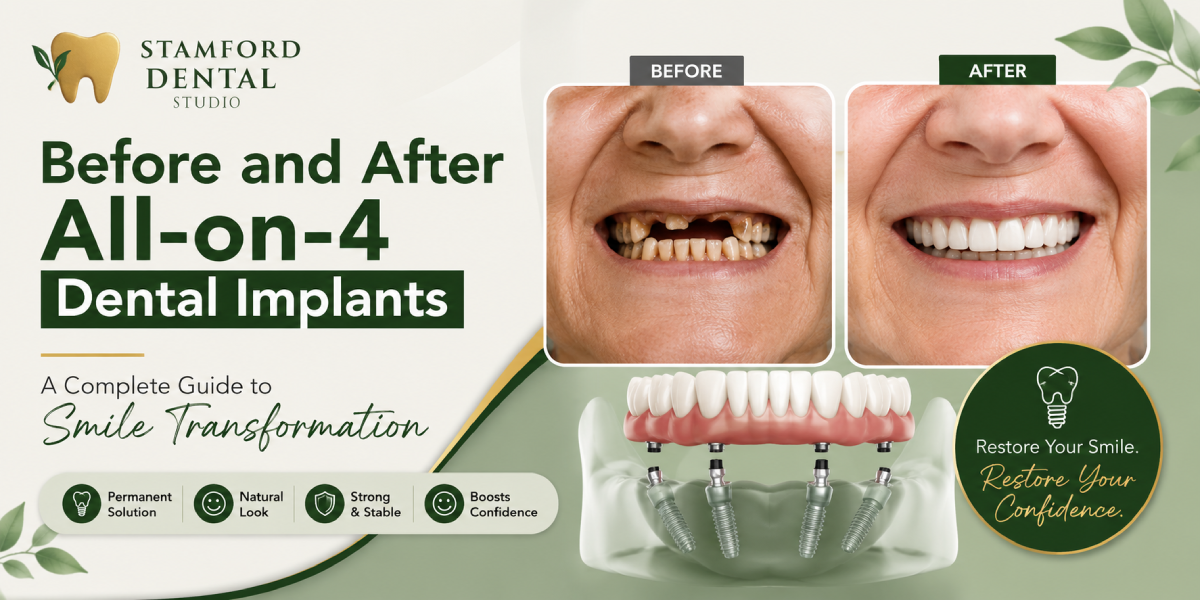
Losing multiple teeth can affect much more than your smile. It can make eating difficult, impact your speech, change your facial appearance, and lower your confidence. Fortunately, All-on-4 dental implants have changed thousands of lives.
They provide a permanent, natural-looking solution for full-arch tooth replacement.
One common question is, “What do All-on-4 dental implants look like before and after treatment?“
Seeing the full change can help you decide if this procedure is right for you.
In this complete guide, we’ll cover All-on-4 dental implants before and after results. We’ll explain the treatment process. We’ll discuss recovery, benefits, risks, and costs. We’ll also answer common questions.
Table of Contents
What Are All-on-4 Dental Implants?
All-on-4 dental implants are an advanced dental treatment.
They replace a full upper or lower arch of missing teeth.
They use just four dental implants placed in key positions.
Instead of replacing each missing tooth, four implants securely support a full arch of prosthetic teeth. This approach offers a stable, long-term solution. It looks, feels, and works much like natural teeth.
Benefits of All-on-4 Dental Implants
- Permanent full-mouth restoration
- Natural-looking smile
- Improved chewing ability
- Better speech
- Prevents jawbone Bone loss or Weakening
- No slipping like removable dentures
- Faster recovery than traditional implant procedures
- Long-lasting results with proper care
Before All-on-4 Dental Implants: What Patients Usually Experience
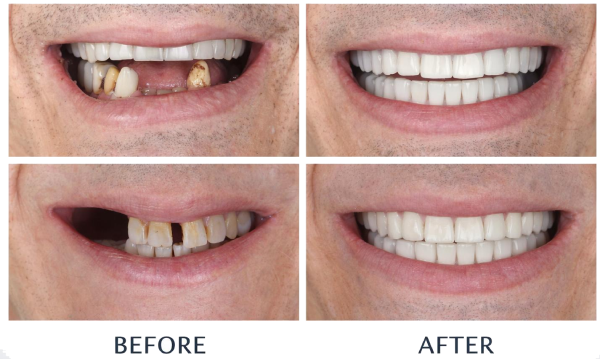
Before treatment, many patients struggle with both physical and emotional challenges.
Missing or Damaged Teeth
Patients often have:
- Multiple missing teeth
- Loose teeth because of gum disease
- Severely decayed teeth
- Broken teeth beyond repair
These problems make everyday activities like eating and smiling uncomfortable.
Difficulty Eating
Chewing tough foods like steak, apples, or nuts can be hard. Many patients switch to soft foods. This can hurt nutrition.
Low Self-Confidence
Missing teeth often make people avoid:
- Smiling
- Taking photographs
- Speaking in public
- Social gatherings
Confidence frequently declines over time.
Facial Changes
When teeth are missing for years, the jawbone begins shrinking. This can cause:
- Sunken cheeks
- Wrinkles around the mouth
- Premature aging
- Reduced facial support
Before Treatment: The Consultation Process
Every successful smile transformation begins with a comprehensive consultation.
Your dentist will typically perform:
- Digital X-rays
- 3D CBCT scan
- Oral examination
- Medical history review
- Gum health evaluation
- Bite analyzed
- Treatment planning
This information helps determine whether you are a good candidate for All-on-4 dental implants.
Who Is a Good Candidate?
You may be a good candidate if you:
- Have multiple missing teeth
- Wear uncomfortable dentures
- Have failing dental work
- Have sufficient jawbone
- Are in good overall health
- Do not smoke heavily or are willing to quit during healing
Even patients with some bone loss may still qualify. This happens because the dentist places the rear implants at an angle. This helps maximize the available bone.
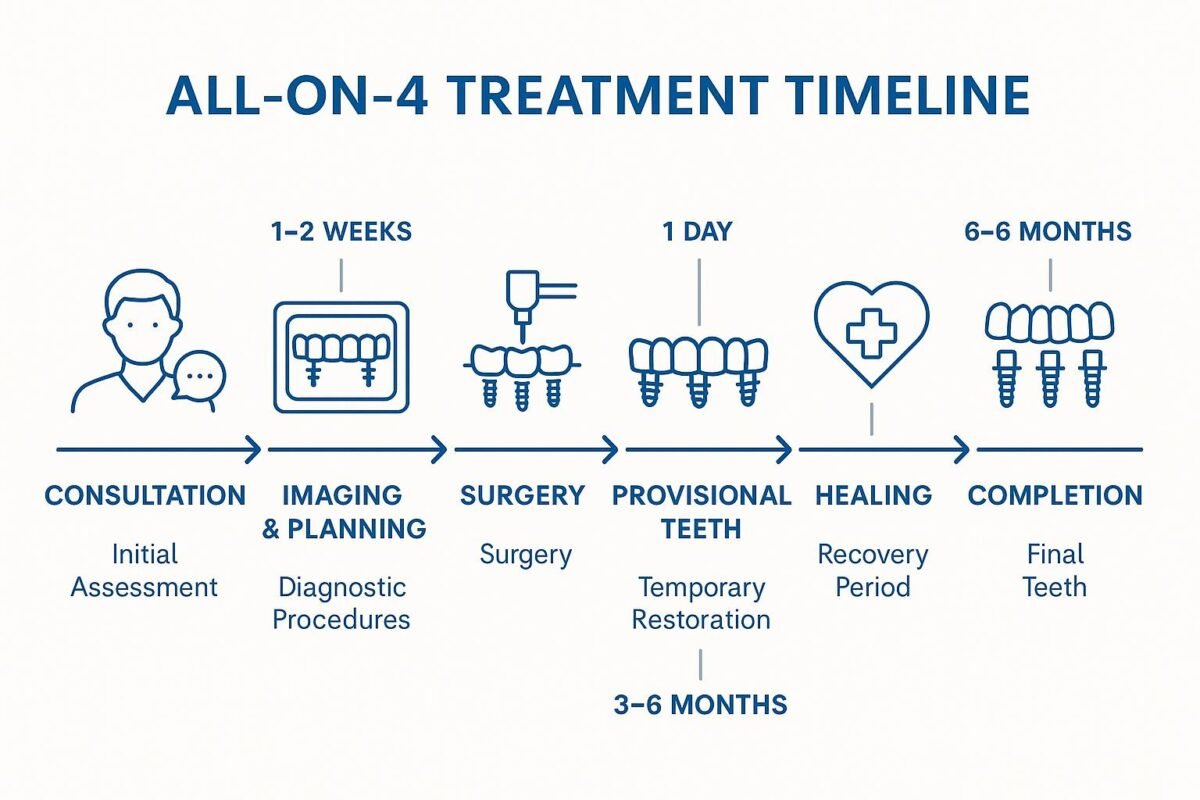
The All-on-4 Procedure
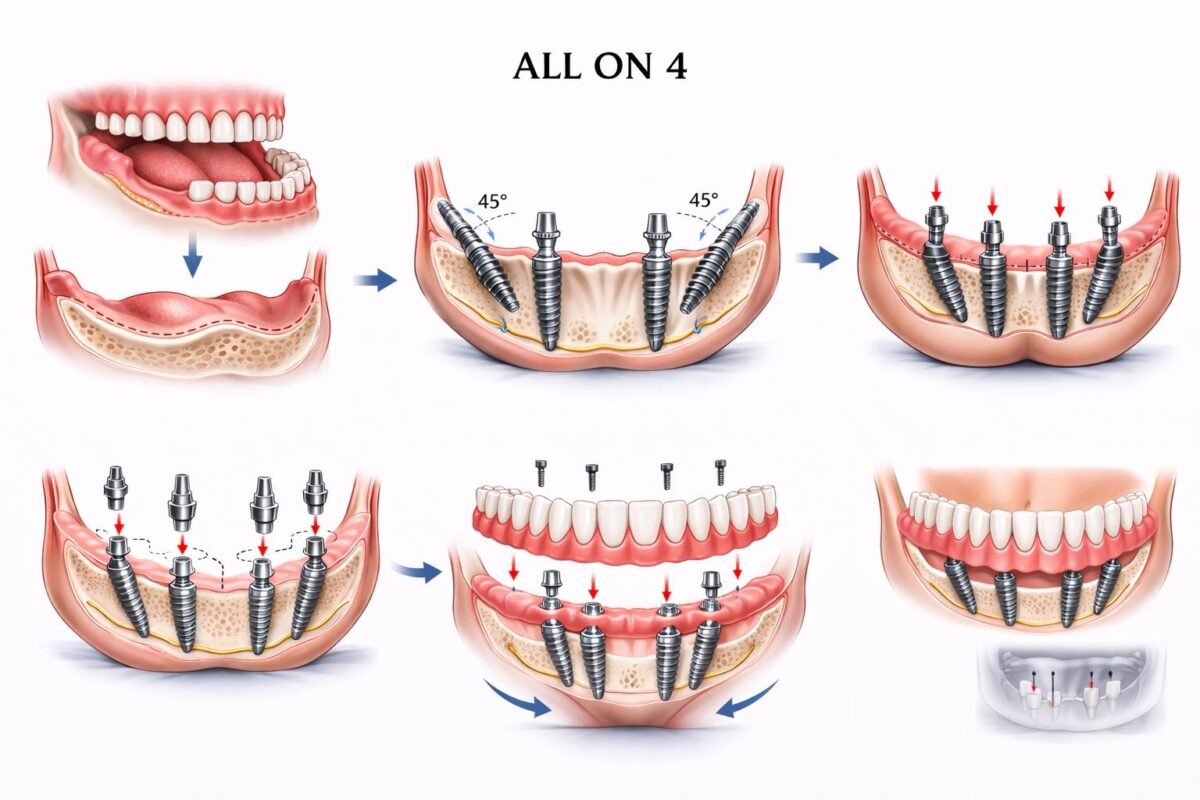
The procedure generally includes the following steps:
Step 1: Tooth Removal (If Needed)
We carefully remove any damaged or non-restorable teeth.
Step 2: Implant Placement
Four titanium implants are precisely inserted into the jawbone.
The clinician places two implants vertically at the front.
A dentist places two implants at an angle in the back for maximum support.
Step 3: Temporary Teeth
In many cases, patients receive a temporary fixed bridge on the same day.
This allows you to leave the office with a functional smile.
Step 4: Healing Period
Over the next few months, the implants naturally fuse with the jawbone. This is part of the healing process, called osseointegration.
Step 5: Permanent Teeth
After healing is complete, your dentist replaces the temporary teeth with a custom-designed permanent prosthesis.
After All-on-4 Dental Implants: What Changes?
The transformation after All-on-4 dental implants can be life-changing.
A Beautiful Natural Smile
Modern implant restorations are designed to mimic natural teeth in:
- Color
- Shape
- Size
- Alignment
Many patients report looking years younger.
Better Eating
Patients can usually return to eating foods they previously avoided, including:
- Steak
- Apples
- Corn
- Salads
- Nuts
Always follow your dentist’s dietary recommendations during healing.
Improved Speech
Loose dentures often move during conversation.
Because All-on-4 implants are permanently secured, speech becomes much clearer.
Renewed Confidence
One of the biggest improvements is emotional.
Patients frequently report feeling comfortable:
- Smiling
- Laughing
- Speaking
- Taking photos
- Meeting new people
Before and After All-on-4 Dental Implants Timeline
Day 1
- Consultation
- Implant surgery
- Temporary teeth placed
Week 1
- Mild swelling
- Minor discomfort
- Soft-food diet
Weeks 2–6
- Healing continues
- Swelling decreases
- Normal daily activities resume
3–6 Months
- Implants fully integrate with bone
- Permanent restoration is fabricated
Final Result
- Strong bite
- Beautiful smile
- Natural appearance
- Long-lasting function
Recovery After All-on-4 Dental Implants
Recovery is generally smoother than many patients expect.
Common temporary symptoms include:
- Mild swelling
- Bruising
- Tenderness
- Minor bleeding
Most patients return to work within a few days.
Your dentist may recommend:
- Ice packs
- Prescribed medications
- Soft foods
- Gentle brushing
- Saltwater rinses
Following post-operative instructions is essential for successful healing.
How Long Do All-on-4 Dental Implants Last?
With proper care:
- Dental implants can last 20 years or more, and many last a lifetime.
- The prosthetic teeth often last 10–15 years before they may need repair or replacement because of normal wear.
Regular dental visits and excellent oral hygiene help maximize longevity.
There Any Risks?
Like any surgical procedure, All-on-4 dental implants carry some risks.
Potential complications include:
- Infection
- Implant failure
- Swelling
- Nerve irritation (rare)
- Sinus complications (upper jaw cases)
Choosing an experienced implant dentist significantly reduces these risks.
Caring for Your New Smile
Proper maintenance is essential.
Brush your teeth twice a day with a soft-bristled toothbrush.
Use:
- Water flosser
- Implant floss
Visit your dentist every six months for professional cleanings and examinations.
Avoid smoking whenever possible, as it can increase the risk of implant failure.
Frequently Asked Questions
Do All-on-4 dental implants look natural?
Yes. Modern restorations are custom-made to match natural teeth and facial features.
Is the procedure painful?
A clinician performs the procedure under local anesthesia or sedation. Most patients experience only mild discomfort afterward.
Can I eat normally afterward?
Yes. Once healing is complete, most patients enjoy a much wider variety of foods than they could with dentures.
How long does treatment take?
Many patients receive temporary teeth on the same day. Dentists usually place final restorations after 3–6 months of healing.
Are All-on-4 implants worth it?
For many patients, they provide improved comfort, function, appearance, and confidence, making them a worthwhile long-term investment.
Final Thoughts
The before and after All-on-4 dental implants transformation goes far beyond cosmetic improvements. Patients often eat comfortably again, speak clearly, smile with confidence, and enjoy a much better quality of life.
If you have several missing or failing teeth, All-on-4 dental implants may be a permanent fix.
They can restore your smile and boost your confidence. A visit with an experienced implant dentist is the best way to see if this treatment is right for you.
