Losing teeth affects more than appearance.
Simple things like eating, speaking clearly, and smiling in photos can start to feel different. That is why many people start looking for a replacement option soon after losing one or more teeth.
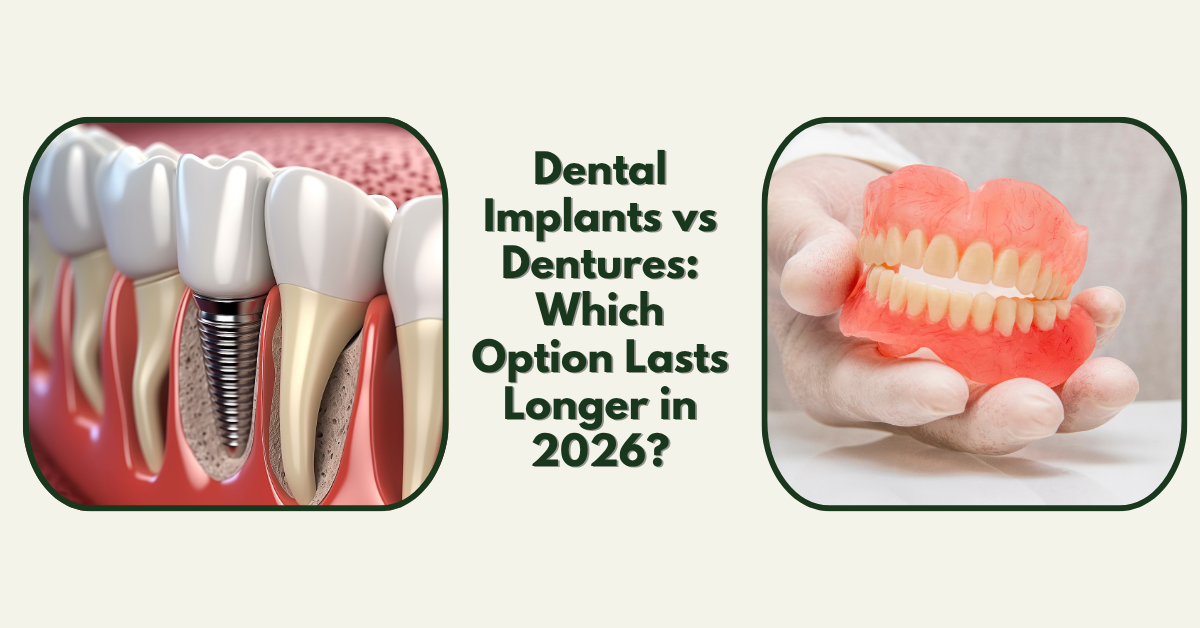
Two of the most common choices are dental implants and dentures.
Both replace missing teeth, but they work in different ways and offer different long-term results.
Some people want the option that lasts the longest. Others care more about cost, comfort, or avoiding surgery.
If you are comparing dental implants and dentures, this article explains the differences in simple language so you can understand what to expect before making a decision.
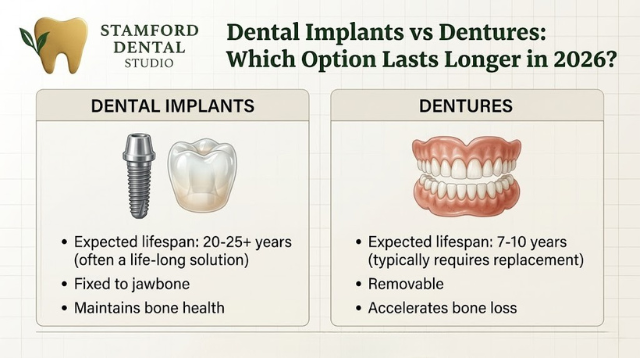
Dental Implants vs Dentures: Quick Comparison
| Feature | Dental Implants | Dentures |
|---|---|---|
| Lifespan | Built for long-term use | Usually need updates over time |
| Appearance | Fixed and natural-looking | Natural-looking and removable |
| Stability | Secure during daily activities | Can move if fit changes |
| Cleaning | Similar to natural teeth | Removed for cleaning |
| Cost | Higher starting cost | Lower starting cost |
| Comfort | Feels closer to natural teeth | Takes time to adjust |
There is no single best option for everyone.
Your oral health, budget, lifestyle, and personal preference all play a role.
What Are Dental Implants?
Dental implants replace missing teeth by placing a small post into the jawbone. Once healing is complete, a replacement tooth is attached.
The final result is made to look and function like a natural tooth.
A dental implant usually includes:
- Implant post
- Connector piece
- Custom crown or restoration
Unlike removable options, implants stay in place.
People often choose implants because they want a stable solution that feels closer to real teeth.
Dental implants can be used for:
- One missing tooth
- Several missing teeth
- Full smile restoration
The treatment process usually happens in stages and may take longer than dentures.
What Are Dentures?
Dentures are removable teeth replacements.
They sit over the gums and restore the look and function of missing teeth.
Dentures have been used for many years and continue to be a practical option for many patients.
There are two common types.
Full Dentures
Full dentures replace all teeth in the upper or lower jaw.
Partial Dentures
Partial dentures replace several missing teeth while keeping the remaining natural teeth.
Modern dentures look more natural than many people expect and can improve everyday function.ery.
Which Lasts Longer: Dental Implants or Dentures?
This is usually the first question people ask.
If the goal is choosing the option that typically lasts longer, dental implants usually come first.
Because implants are placed into the jaw structure, they stay stable and are not removed each day.
Dentures work differently.
Since they rest on the gums, the fit can change over time. Adjustments, repairs, or replacement may eventually be needed.
That does not mean dentures are a poor choice.
Many people wear dentures successfully for years.
The difference is that dentures usually require more ongoing maintenance.
WHow Long Do Dental Implants Last?
One reason implants are popular is their durability.
With regular dental care and healthy daily habits, implants are built to support long-term use.
Several things affect how long they perform well.
Daily Cleaning
Healthy gums support the area around the implant.
Routine Dental Visits
Regular checkups help identify small issues before they become bigger problems.
Lifestyle Habits
Smoking and inconsistent oral care can affect long-term results.
Bite and Oral Health
Good overall dental health supports implant performance.
While the replacement tooth attached to the implant may need maintenance in the future, the implant itself is intended to provide long-term support.
How Long Do Dentures Last?
Dentures can work well for many years, but they usually need updates along the way.
Changes inside the mouth happen naturally over time.
These changes can affect the fit and comfort of dentures.
Common reasons people update dentures include:
- Wear over time
- Changes in bite
- Gum changes
- Comfort issues
Signs that dentures may need attention:
- Movement while eating
- Difficulty speaking
- Pressure spots
- Changes in fit
Regular dental visits help keep dentures comfortable and working properly.
So Which One Wins for Lifespan?
If your main goal is choosing the option that usually lasts longer, dental implants often come out ahead.
If lower starting cost and a removable option matter more, dentures remain a strong choice.
The decision is not only about lifespan.
Dental Implants vs Dentures Cost: What Should You Expect?
Cost is one of the biggest reasons people compare implants and dentures.
The lower price of dentures attracts many patients at the beginning. Dental implants usually cost more upfront.
But the starting price is only part of the picture.
When comparing treatment options, think about:
- Initial treatment cost
- Future repairs
- Maintenance needs
- Replacement costs
- Long-term value
Dentures: Lower Starting Cost
Dentures usually cost less at the beginning because treatment is simpler and often takes less time.
For many people, this makes dentures easier to start with.
Still, dentures may need:
- Adjustments
- Relining
- Repairs
- Replacement in the future
These costs can add up over time.
Dental Implants: Higher Upfront Cost
Dental implants usually involve more planning and treatment steps.
That often means a higher initial investment.
People who choose implants often value:
- Long-term stability
- Fixed replacement teeth
- Daily convenience
- Natural feel
Instead of focusing only on today’s cost, think about what matters over the next several years.
Which Feels More Comfortable?
Comfort matters because replacement teeth become part of daily life.
Eating, speaking, smiling, and cleaning all affect how satisfied people feel with treatment.
Dental Implants
Many people describe implants as feeling closer to natural teeth.
Because implants stay fixed in place, there is no need to remove them each day.
People often like:
- Secure fit
- Less movement
- More confidence while speaking
Dentures
Dentures feel different because they rest over the gums.
Most people need time to get used to them.
During the adjustment period, people sometimes notice:
- Extra saliva
- Mild pressure
- Different chewing feeling
This often improves with time and proper fit.
Eating With Dental Implants vs Dentures
Food is another major factor.
Many patients want to know whether they will need to change the way they eat.
Eating With Dental Implants
Because implants stay stable, eating often feels more natural.
People usually feel more comfortable with:
- Firmer foods
- Daily meals
- Balanced chewing
Eating With Dentures
Dentures can restore chewing ability, but some foods may feel different.
Patients sometimes adjust eating habits by:
- Taking smaller bites
- Chewing slowly
- Avoiding very sticky foods
The experience depends on fit and personal comfort.
Speaking and Daily Confidence
Missing teeth can affect speech.
Replacement teeth often improve confidence in conversations and social situations.
Dental Implants
People often choose implants because they stay in place during normal daily activities.
This may help reduce concerns about movement while talking.
Dentures
Dentures may require a short adjustment period.
Reading out loud and regular use often help patients adapt faster.
Bone Changes: An Important Difference Many People Miss
This topic does not always get enough attention.
After losing teeth, the jaw area can naturally change over time.
Dental implants and dentures work differently here.
Dental Implants
Implants connect directly with the jaw structure.
Dentures
Dentures replace visible teeth but sit over the gums.
Because they function differently, long-term support may feel different depending on the person.
This is one reason many patients ask about implants during consultations.
Implant-Supported Dentures: A Middle Option
Not everyone wants traditional dentures.
Not everyone wants individual implants either.
Implant-supported dentures combine both ideas.
A denture attaches more securely with implant support.
People often choose this option because they want:
- Better stability
- Less movement
- More confidence while eating
- Easier everyday use
For some patients, this becomes a balance between cost and stability.
Who Usually Chooses Dental Implants?
Dental implants are often considered by people who:
- Want a fixed replacement
- Prefer long-term stability
- Want a solution that feels closer to natural teeth
- Plan to keep the same restoration for many years
The treatment process usually takes longer than dentures.
Who Usually Chooses Dentures?
Dentures are often considered by people who:
- Need multiple teeth replaced
- Prefer a removable option
- Want a lower starting cost
- Want a shorter treatment timeline
Modern dentures continue to be a practical choice for many adults.
Which Option Is Better?
There is no automatic winner.
Choose dental implants if your priorities are:
✓ Long-term use
✓ Stability
✓ Natural feel
Choose dentures if your priorities are:
✓ Lower starting cost
✓ Simpler treatment
✓ Removable teeth
A consultation and examination help match treatment to your goals.
Common Mistakes People Make Before Choosing Implants or Dentures
Choosing replacement teeth is a big decision.
Many people focus only on one factor and regret it later.
These are some common mistakes to avoid.
Choosing Based Only on Cost
A lower starting price does not always mean lower long-term expense.
Think about maintenance, repairs, comfort, and future treatment needs.
Ignoring Daily Routine
Ask yourself:
- Do I want removable teeth?
- Do I want less maintenance?
- How important is convenience?
Your everyday habits matter.
Rushing the Decision
Take time to ask questions and understand the treatment process.
Comparing options carefully usually leads to better long-term satisfaction.
Questions to Ask Before Choosing Dental Implants or Dentures
Before deciding, ask these questions during your consultation.
How many teeth need replacement?
Treatment options can change depending on the number of missing teeth.
What maintenance should I expect?
Knowing how to care for replacement teeth helps avoid future problems.
How long will treatment take?
Different options follow different timelines.
What fits my budget long term?
Think beyond the first appointment.
What result matters most to me?
Comfort, appearance, stability, and convenience all matter.
Quick Summary: Dental Implants vs Dentures
If you want a simple comparison, this section gives a quick overview.
Choose Dental Implants if you want:
- A fixed solution
- More stability
- Long-term value
- A feel closer to natural teeth
Choose Dentures if you want:
- Lower starting cost
- Faster treatment in many cases
- A removable option
- Multiple teeth replaced
Both options help restore smiles.
The right choice depends on what works best for your goals.
Frequently Asked Questions
Which lasts longer: dental implants or dentures?
Dental implants are usually considered the longer-lasting option because they stay fixed and support daily function differently than removable dentures.
Are dentures cheaper than implants?
Dentures usually cost less at the beginning, while implants often involve a higher upfront investment.
Do implants feel more natural?
Many people choose implants because they stay fixed and feel more similar to natural teeth.
Can dentures look natural?
Modern dentures are made to create a natural appearance.
Are implants worth the extra cost?
That depends on your goals. Some people value long-term stability, while others prefer a lower starting cost.
Which option is easier to clean?
Dentures are removed for cleaning. Implants are cleaned similarly to natural teeth.
Can older adults get dental implants?
Age alone does not automatically decide treatment. A dental evaluation helps determine what is suitable.
Final Thoughts:
Dental implants and dentures both replace missing teeth, but they offer different experiences.
If your goal is long-term stability and a solution that stays in place, dental implants are often the option people compare first.
If your goal is a lower starting cost and a removable replacement, dentures remain a trusted choice.
There is no perfect answer for everyone.
The best choice depends on your oral health, comfort, lifestyle, budget, and what matters most to you.
Talking with a dental professional can help you understand which option fits your situation and expectations.
Looking for Tooth Replacement Options in Stamford?
Looking for guidance on replacing missing teeth? Contact Stamford Dental Studio to discuss whether dental implants, dentures, or implant-supported options may be right for your smile.
Disclaimer
The information in this article is intended for general education and should not be considered dental or medical advice. Treatment recommendations vary from person to person. Please schedule a consultation with a qualified dental professional for evaluation and personalized care
