
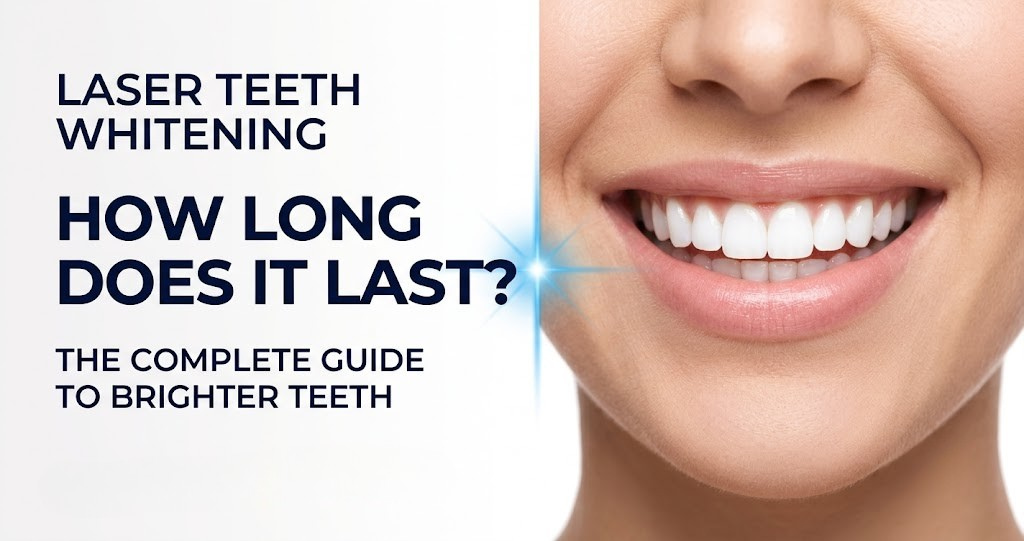
Smiling confidently with a great smile creates an everlasting impression on people. However, after some period of time, teeth get stained due to various reasons such as consumption of beverages and tobacco, age, etc. Teeth whitening has become the favorite cosmetic dental procedure and among them, the choice of laser teeth whitening is common.
One of the most common questions patients ask is:
How long does laser teeth whitening last?
The short answer: Laser teeth whitening results typically last anywhere from 6 months to 2 years, depending on your lifestyle, oral hygiene, and maintenance routine.
This guide explains how laser teeth whitening works, what affects longevity, and how to keep your smile brighter for longer.
What Is Laser Teeth Whitening?
Laser teeth whitening is a professional cosmetic dental treatment designed to lighten discoloration and remove stains from tooth enamel.
During the procedure:
- A protective barrier is placed over the gums.
- A professional-strength whitening gel is applied to the teeth.
- A specialized light or laser activates the whitening agent.
- The treatment helps break down stain molecules more efficiently.
Unlike many over-the-counter products, professional laser whitening delivers controlled and more immediate results under dental supervision.
How Long Does Laser Teeth Whitening Last?
Most patients can expect results to last:
- 6–12 months with minimal maintenance
- 12–24 months with good oral hygiene and healthy habits
- Sometimes longer depending on diet and enamel condition
Results vary from person to person.
Several factors determine how long your whitening results remain visible.
Factors That Affect How Long Teeth Whitening Lasts
1. Your Diet and Daily Habits
Dark-colored foods and drinks can gradually stain enamel again.
Common staining foods include:
- Coffee
- Tea
- Red wine
- Cola
- Tomato-based sauces
- Curry
- Berries
If consumed regularly, whitening may fade faster.
Using a straw for darker beverages and rinsing with water afterward may help reduce staining.
2. Smoking and Tobacco Use
Smoking is one of the biggest causes of tooth discoloration.
Nicotine and tar create yellow or brown staining that can reduce whitening longevity.
Patients who smoke generally notice whitening fading more quickly.
3. Oral Hygiene Routine
Daily oral care strongly affects how long your smile stays bright.
Recommended habits:
- Brush twice daily
- Floss every day
- Use non-abrasive toothpaste
- Schedule professional cleanings
Plaque buildup attracts stains and dulls whitening results.
4. Natural Tooth Characteristics
Every smile responds differently.
Results can vary based on:
- Enamel thickness
- Existing discoloration
- Genetics
- Age
- Internal vs external stains
Yellow-toned stains often respond better than gray-toned discoloration.
5. Professional Maintenance
Periodic touch-up treatments may help maintain brightness over time.
Your dentist may recommend:
- In-office touch-up whitening
- Custom take-home whitening trays
- Routine dental cleaning schedules
What Results Can You Expect?
Laser whitening can significantly improve tooth shade, but results differ.
Many patients notice:
✓ Brighter smile appearance
✓ Reduced visible staining
✓ Improved confidence
✓ Faster results than many at-home systems
However, whitening does not permanently prevent future discoloration.
Realistic expectations are important.
Does Laser Teeth Whitening Work on All Stains?
Not always.
Laser whitening is generally most effective for:
Responds Well:
- Coffee stains
- Tea stains
- Surface discoloration
- Age-related yellowing
May Respond Less:
- Deep internal stains
- Certain medication-related discoloration
- Trauma-related discoloration
- Some gray-toned stains
Dental restorations such as crowns, veneers, and fillings typically do not whiten.
A dental evaluation helps determine expected outcomes.
How to Make Laser Teeth Whitening Last Longer
If you want longer-lasting results, follow these practical habits.
Avoid Dark Foods for the First 48 Hours
Immediately after whitening, enamel may temporarily absorb pigments more easily.
Limit:
- Coffee
- Tea
- Red wine
- Colored sauces
- Dark berries
Choose lighter foods during this period.
Examples:
- Rice
- Chicken
- Yogurt
- White fish
- Pasta without heavy sauces
Maintain Excellent Oral Hygiene
Daily care remains one of the most important factors.
Recommended routine:
Morning:
- Brush for 2 minutes
Evening:
- Brush
- Floss thoroughly
Optional:
- Alcohol-free mouthwash
Schedule Professional Dental Cleanings
Regular cleanings remove surface stains before they become more noticeable.
Professional maintenance supports long-term whitening appearance.
Stay Hydrated
Water helps rinse away pigments and reduce staining exposure.
Drinking water after meals can support cleaner-looking teeth.
Consider Touch-Up Whitening
Depending on your goals, occasional touch-ups may help maintain results.
Ask your dentist about an appropriate schedule.
Laser Teeth Whitening vs At-Home Whitening: Which Lasts Longer?
| Feature | Laser Teeth Whitening | At-Home Whitening |
|---|---|---|
| Speed | Faster | Slower |
| Strength | Professional-grade | Lower concentration |
| Supervision | Dentist monitored | Self-managed |
| Initial Results | Often more noticeable | Gradual |
| Longevity | Often longer with care | Variable |
Professional whitening may provide stronger short-term results, while maintenance habits influence long-term appearance.
Is Laser Teeth Whitening Safe?
Professional whitening is generally considered safe when performed appropriately.
Some temporary effects may include:
- Mild tooth sensitivity
- Temporary gum irritation
- Sensitivity to temperature
These effects are usually short-term.
Always follow professional guidance before and after treatment.
Who Is a Good Candidate for Laser Teeth Whitening?
You may be a candidate if you:
- Have healthy teeth and gums
- Want cosmetic stain reduction
- Have external discoloration
- Prefer faster whitening results
You may require evaluation first if you have:
- Active cavities
- Gum disease
- Extensive restorations
- Significant sensitivity
Frequently Asked Questions
Does laser teeth whitening damage enamel?
Professional whitening is designed to minimize risk when used correctly. Your dentist evaluates suitability before treatment.
Can I drink coffee after laser whitening?
You may be advised to limit dark beverages during the first 24–48 hours to reduce immediate restaining.
How often can I whiten my teeth?
This depends on individual factors and professional recommendations.
Is laser whitening painful?
Most patients tolerate treatment well. Temporary sensitivity can occur.
Can yellow teeth become white again?
Many surface and age-related stains respond well, although outcomes vary.
Final Thoughts
So, how long does laser teeth whitening last?
For most people, results can remain visible for 6 months to 2 years, depending on oral hygiene, diet, smoking habits, and maintenance.
Laser whitening offers a fast and professional option for improving smile brightness, but maintaining those results requires consistent care.
If you’re considering treatment, a professional consultation can help determine whether laser teeth whitening aligns with your goals and expected results.
