

A sudden toothache, a broken tooth, or swelling around your gums can turn an ordinary day into a stressful one. You may wonder whether the problem can wait until tomorrow or whether you need to see a dentist right away. Knowing the warning signs can help you protect your teeth, reduce discomfort, and avoid complications.
If you are looking for an emergency dentist in Stamford, CT, it is important to understand which symptoms need urgent attention and what you should do before your appointment.
At Stamford Dental Studio, patients can contact the team about urgent dental concerns, including tooth pain, cracked teeth, swelling, and dental injuries. Call ahead so the office can understand your symptoms and advise you about the next step.
When Should You See an Emergency Dentist?
You should contact an emergency dentist as soon as possible if you have severe or persistent tooth pain, a broken or knocked-out permanent tooth, facial or gum swelling, pus near a tooth, a dental injury, or bleeding that does not stop.
Seek emergency medical care immediately if you have trouble breathing or swallowing, rapidly spreading facial or neck swelling, a serious jaw injury, or heavy bleeding that you cannot control. These symptoms may indicate a serious medical emergency.
Not every dental problem requires a hospital visit, but you should not ignore symptoms that are getting worse.
Table of Contents
1. Signs You Should See an Emergency Dentist in Stamford, CT
Severe or Persistent Toothache

A toothache that keeps you awake, interferes with eating, or becomes more painful over time should not be ignored. Tooth pain may be related to tooth decay, a cracked tooth, inflammation inside the tooth, or an infection.
You might notice sharp pain when biting, sensitivity to hot or cold foods, or a constant throbbing sensation. Even if the pain suddenly disappears, the underlying problem may still need attention.
What should you do?
- Rinse your mouth gently with warm water.
- Carefully floss around the tooth if food may be trapped.
- Avoid chewing on the painful side.
- Contact a dentist promptly, especially if the pain is severe or persistent.
Do not place aspirin directly on your tooth or gums. It can irritate and damage the tissue.
If you have a severe toothache in Stamford, CT, arrange a dental assessment rather than relying on pain relief alone.
A Broken, Cracked, or Chipped Tooth
A tooth can crack or break while eating hard food, playing sports, or following an accident. Sometimes the damage is obvious. In other cases, you may only notice pain when chewing or sensitivity when drinking something cold.
A small chip without pain may not require emergency treatment, but a large fracture, sharp edge, significant pain, or visible inner tooth tissue deserves prompt attention.
What should you do?
- Rinse your mouth gently with warm water.
- Save any broken tooth fragments and bring them to your appointment.
- Apply a cold compress to the outside of your face if swelling develops.
- Avoid chewing on the damaged tooth.
An emergency dentist can examine the tooth and determine whether it needs bonding, a filling, a crown, root canal treatment, or another procedure.
A Knocked-Out Permanent Tooth
A permanent tooth knocked out during a fall, sports injury, or accident needs immediate dental attention. Time matters, so call a dentist straight away while arranging care.
What should you do?
- Pick up the tooth by its crown, which is the visible chewing portion. Avoid touching the root.
- If dirty, rinse it gently with milk or saline; do not scrub it or remove attached tissue.
- If it is a permanent tooth and you can easily place it back into the socket, do so carefully. Do not force it.
- If you cannot replace it, keep it moist in milk or a tooth-preservation solution and seek urgent dental care.
Do not store the tooth dry or wrap it in tissue. A knocked-out baby tooth should not be placed back into the socket.
Call immediately and follow the dentist’s instructions. A knocked-out tooth is time-sensitive, and quick action can improve the chance of saving it.
Swelling Around Your Gums, Face, or Jaw
Swelling near a painful tooth may be a sign of a dental abscess or another infection. Other warning signs include a bad taste in your mouth, pus, gum tenderness, fever, or feeling generally unwell.
A dental infection can become serious if it spreads. Do not wait for facial swelling to disappear on its own, and do not try to pop or drain an abscess at home.
Contact a dentist urgently if you notice swelling, pus, or worsening dental pain. If swelling spreads rapidly, reaches your neck or eye, or makes breathing or swallowing difficult, seek emergency medical care immediately.
A dentist will assess the source of the infection and recommend appropriate treatment. Antibiotics alone may not resolve the cause; some infections also require dental treatment to address the affected tooth or tissue.
Bleeding That Does Not Stop
A small amount of bleeding after accidentally biting your cheek may settle quickly. However, heavy or persistent bleeding following an injury or dental procedure requires prompt attention.
If the bleeding is from a soft-tissue injury, apply gentle, steady pressure with clean gauze when safe to do so. If bleeding is heavy, continues despite pressure, or follows a serious facial injury, seek emergency medical care.
Do not delay getting help if you feel faint or weak, or if the injury is deep.
A Lost Filling or Dental Crown
A filling or crown can come loose while eating or brushing your teeth. You may feel a rough edge, notice a gap, or experience sensitivity when food or liquid touches the exposed tooth.
Even if the tooth does not hurt, arrange a dental appointment soon. The exposed area may be vulnerable to further damage.
Until you receive care:
- Keep the area clean.
- Avoid chewing hard or sticky foods on that side.
- Save the crown or filling if you can.
- Do not use household glue to attach a crown.
A dentist can check whether the crown or filling can be repaired or replaced and whether the tooth underneath needs additional treatment.
Painful or Swollen Wisdom Teeth
Wisdom teeth can cause discomfort when they do not have enough room to emerge properly. Food and bacteria may collect around a partially erupted tooth, leading to gum inflammation, swelling, unpleasant taste, or difficulty opening your mouth.
Mild discomfort should still be assessed if it persists, but significant swelling, worsening pain, fever, or difficulty swallowing requires urgent attention.
Do not assume wisdom tooth pain will disappear permanently on its own. A dental examination can help identify the cause and determine whether treatment is needed.
2. What Should You Do Before Your Emergency Dental Appointment?
When a dental problem occurs, a few simple steps can help protect the affected area until you receive professional advice.
For tooth pain: Rinse gently with warm water, avoid very hot or cold foods if they trigger pain, and do not chew on the affected side.
For swelling: Apply a cold compress to the outside of your cheek for short intervals. Do not apply heat to a suspected dental infection or attempt to drain swelling yourself.
For a broken tooth: Save any fragments, rinse gently, and avoid biting down on the damaged tooth.
For a knocked-out permanent tooth: Keep the tooth moist and seek dental care immediately.
For bleeding: Use clean gauze and steady pressure if appropriate. Seek emergency medical care for heavy or uncontrolled bleeding.
If you use over-the-counter pain medication, follow the label and check with a healthcare professional or pharmacist if you are unsure whether it is safe for you. Never put pain medication directly on your gums.
When contacting an emergency dentist in Stamford, explain what happened, when the symptoms began, how severe the pain is, and whether you have swelling, fever, bleeding, or an injury. This information helps the dental team assess how urgently you need care.
3. Is It a Dental Emergency or Can It Wait?
Not every dental issue needs immediate treatment, but it is better to ask a dentist than guess.
| Dental problem | Recommended next step |
|---|---|
| Severe or worsening toothache | Contact a dentist urgently |
| Knocked-out permanent tooth | Seek immediate dental care |
| Facial swelling with dental pain | Seek urgent assessment |
| Trouble breathing or swallowing | Seek emergency medical care immediately |
| Large fracture or painful broken tooth | Contact a dentist promptly |
| Lost crown or filling without severe pain | Arrange a prompt dental visit |
| Small chip without pain | Schedule an assessment; sooner if symptoms develop |
| Mild sensitivity that persists | Arrange a dental appointment |
This guide is general information, not a diagnosis. If you are unsure whether your symptoms are urgent, call a dental office and describe what you are experiencing.
4. What Happens During an Emergency Dental Appointment?
Dental emergencies can feel frightening, particularly when you are in pain or do not know what is wrong. An emergency visit usually starts with questions about your symptoms, when they began, and whether an injury or previous dental problem may be involved.
The dentist will examine the affected tooth, gums, and surrounding tissues. Dental X-rays may be recommended to check for problems that cannot be seen during a visual examination.
Treatment depends on the cause and severity of the problem. It may involve relieving pressure, treating decay, repairing a damaged tooth, stabilising an injury, addressing an infection, or arranging additional treatment.
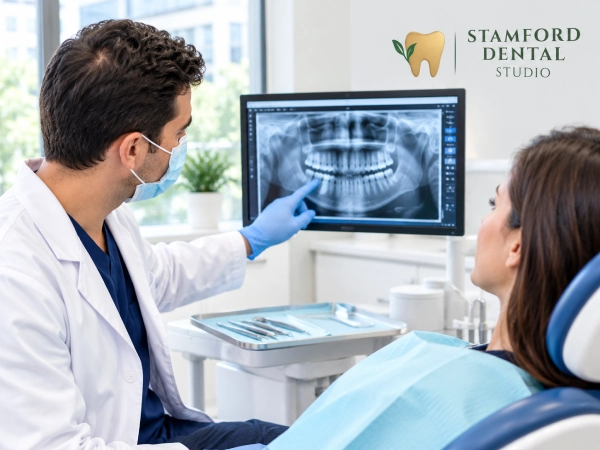
For example, a damaged tooth may need a filling or crown, while a tooth with significant damage to its inner tissue may require root canal treatment. In some cases, extraction or specialist care may be recommended.
Before treatment begins, ask about the proposed procedure, expected costs, and any available alternatives. Understanding the plan can help you make an informed decision.
If you need emergency dental care in Stamford, CT, Stamford Dental Studio provides information about urgent dental treatment on its website. Call the office before visiting so the team can discuss your symptoms and appointment options.
5. How to Help Prevent Dental Emergencies
Not every dental emergency can be prevented, but everyday habits can reduce your risk.
- Keep up with regular dental visits. Exams can help identify cavities, weakened teeth, and gum problems before they become more serious.
- Brush twice a day. Use fluoride toothpaste and clean all tooth surfaces carefully.
- Clean between your teeth daily. Floss or use another recommended interdental cleaner to remove plaque and food debris.
- Avoid chewing hard objects. Ice, hard sweets, and non-food items can crack teeth.
- Wear a mouthguard for sports. A properly fitted mouthguard can help protect your teeth during contact sports and activities with a risk of facial impact.
- Do not ignore recurring symptoms. Sensitivity, pain when biting, or bleeding gums deserve attention, particularly when they persist or worsen.
- Address damaged dental work. A loose crown or broken filling should be checked before the tooth suffers further damage.
If you have an existing dental concern, ask your dentist whether it needs treatment and what signs would mean you should seek urgent care.
6. Where to Get Emergency Dental Care in Stamford, CT
If you are experiencing tooth pain, a cracked tooth, swelling, or another urgent dental problem, contact a dental office for guidance as soon as possible.
Stamford Dental Studio
95 Morgan Street, Suite 1A
Stamford, CT 06905
Phone: (203) 327-7498
You can visit the practice’s emergency dental treatment page to learn more about the problems the office treats. Call ahead to discuss your symptoms and confirm appointment availability.
If you have a medical emergency, such as difficulty breathing or swallowing, severe facial trauma, or rapidly spreading swelling, do not wait for a routine dental appointment. Seek emergency medical care.
Frequently Asked Questions
When should I see an emergency dentist in Stamford, CT?
Contact a dentist urgently for severe or persistent tooth pain, a knocked-out permanent tooth, a painful fracture, facial or gum swelling, signs of infection, or bleeding that does not stop. Difficulty breathing or swallowing requires immediate emergency medical care.
Can a toothache be a dental emergency?
Yes. Severe, persistent, or worsening tooth pain can indicate decay, a crack, inflammation, or infection. Contact a dentist for an assessment rather than relying only on pain medication.
What should I do if my tooth gets knocked out?
Pick up the tooth by the crown, avoid touching the root, and keep it moist. If it is a permanent tooth, you may gently place it back in the socket if this is easy and safe. Otherwise, store it in milk or a tooth-preservation solution and seek immediate dental care. Never reinsert a baby tooth.
Should I go to the emergency room or a dentist?
A dentist is generally the right person to treat most toothaches, broken teeth, and other dental problems. Go to the emergency room or call emergency services for difficulty breathing or swallowing, serious facial or jaw trauma, rapidly spreading swelling, or uncontrolled bleeding.
Can a broken tooth wait until the next day?
It depends on the damage. A tiny chip without pain may be less urgent, but a large break, severe pain, bleeding, or swelling needs prompt assessment. Contact a dentist and describe your symptoms before deciding to wait.
How much does emergency dental care cost in Stamford, CT?
The cost depends on the examination, diagnostic tests, and treatment required. A visit may involve an examination and X-rays, while a damaged or infected tooth may need additional treatment. Ask the office about the examination fee, treatment estimate, insurance coverage, and payment options before proceeding.
Does Stamford Dental Studio treat dental emergencies?
Stamford Dental Studio lists emergency dental treatment for concerns such as severe toothaches, broken teeth, swelling, dental injuries, and other urgent problems. Call (203) 327-7498 to discuss your symptoms and confirm current appointment availability.
Do Not Ignore the Warning Signs
Severe tooth pain, a broken tooth, swelling, or a dental injury can be difficult to manage on your own. Getting the right advice early can help protect your oral health and reduce the risk of further complications.
If you are looking for an emergency dentist in Stamford, CT, contact Stamford Dental Studio to discuss your symptoms and available appointment options.
Stamford Dental Studio
95 Morgan Street, Suite 1A, Stamford, CT 06905
Call: (203) 327-7498
This article is for general educational purposes and does not replace an examination or advice from a qualified dental or medical professional.
Related Posts


Ready for a healthier, brighter smile?
Talk to our Stamford dental team — gentle, judgment-free care for every age.