
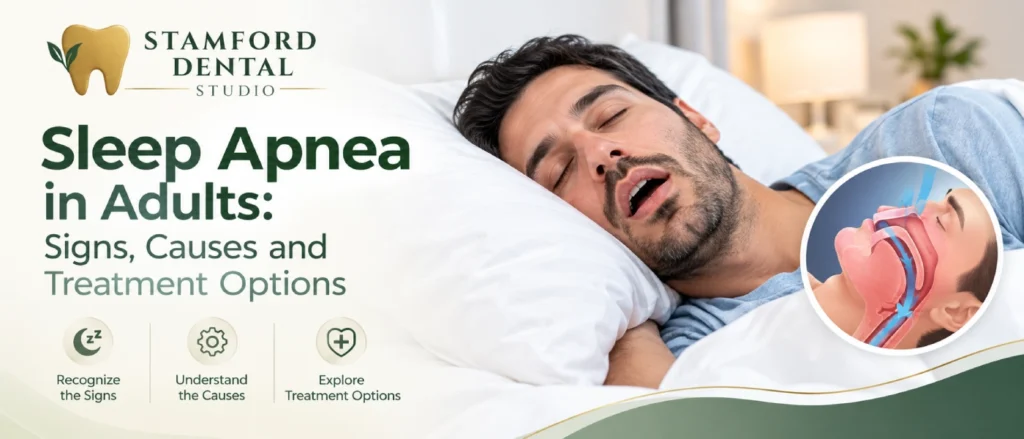
Do you wake up tired even after spending seven or eight hours in bed? Does your partner complain about loud snoring? Have they noticed that you stop breathing, gasp or suddenly move during sleep?
These can be signs of sleep apnea, a common sleep-related breathing disorder that can affect the quality of your sleep and your daily life.
Many adults do not realize they have sleep apnea because the symptoms happen while they are asleep. A partner or family member may notice the problem first.
Sleep apnea is more than simply being a loud snorer. During an episode of obstructive sleep apnea, the upper airway becomes narrowed or blocked while you sleep, causing breathing to become reduced or stop temporarily. Your body can respond by briefly waking you or changing your breathing pattern so that normal airflow resumes.
These interruptions can happen repeatedly throughout the night.
If you regularly snore, wake up gasping, experience daytime tiredness or have been told that your breathing stops while you sleep, it is worth discussing your symptoms with a healthcare professional.
What Is Sleep Apnea?
Sleep apnea is a condition in which breathing repeatedly stops or becomes reduced during sleep.
There are different types of sleep apnea, but obstructive sleep apnea (OSA) is the most common type.
With obstructive sleep apnea, the muscles and tissues around the upper airway relax during sleep. In some people, this causes the airway to become partially or completely blocked.
When breathing is interrupted, oxygen levels can fall and the body may briefly shift out of deeper sleep to restore normal breathing.
You may not remember these brief awakenings in the morning.
This can make sleep apnea difficult to recognize without someone else noticing your symptoms or undergoing appropriate sleep testing.
What Are the Signs of Sleep Apnea in Adults?
Sleep apnea does not look exactly the same in everyone.
Common nighttime and daytime symptoms can include:
- Loud or frequent snoring
- Pauses in breathing during sleep
- Gasping or choking during sleep
- Waking with a dry mouth
- Morning headaches
- Waking frequently during the night
- Daytime sleepiness
- Difficulty concentrating
- Irritability or mood changes
- Feeling tired after a full night’s sleep
- Trouble staying awake while reading or watching television
- Reduced energy during the day
You do not need to have every symptom to have sleep apnea.
1. Loud Snoring
Loud snoring is one of the most recognizable symptoms associated with obstructive sleep apnea.
However, not everyone who snores has sleep apnea, and not everyone with sleep apnea necessarily snores loudly.
The important thing is to look at the complete picture.
If your snoring is frequent and your partner notices pauses, gasping or choking sounds, it is worth discussing with a healthcare provider.
2. Breathing Pauses During Sleep
A partner may tell you:
“You stopped breathing.”
You may not notice this yourself.
Breathing pauses can be followed by a gasp, snort or sudden change in breathing. Some people move or change sleeping positions immediately afterward.
Observed breathing pauses are an important symptom to mention during a sleep evaluation.
3. Waking Up Gasping or Choking
Some people with obstructive sleep apnea wake suddenly because they feel like they cannot breathe.
You may sit up, take a deep breath and then fall back asleep.
If this happens repeatedly, it should not simply be dismissed as a bad night of sleep.
4. Feeling Tired After Sleeping
One of the most frustrating symptoms of sleep apnea is waking up feeling as though you barely slept.
You may spend enough time in bed but still feel tired in the morning.
Sleep interruptions can prevent normal, restorative sleep patterns.
Daytime sleepiness can affect work, driving, exercise, concentration and everyday activities.
5. Morning Headaches
Some people with sleep apnea experience headaches after waking.
Morning headaches can have many possible causes, so a headache by itself does not mean that you have sleep apnea.
But when morning headaches occur together with loud snoring, breathing pauses or daytime fatigue, they are worth discussing with a healthcare professional.
6. Dry Mouth in the Morning
Do you regularly wake up with a very dry mouth?
This may occur when you breathe through your mouth while sleeping.
Mouth breathing can have different causes, including nasal obstruction and other airway concerns. It does not automatically mean that someone has sleep apnea.
However, persistent mouth breathing combined with snoring or other symptoms can be useful information during an airway and sleep evaluation.
Why Does Sleep Apnea Happen?
There is no single cause of obstructive sleep apnea.
Several factors can contribute to airway narrowing during sleep.
These may include:
- Airway anatomy
- Jaw position
- Tongue position
- Enlarged tissues in the throat
- Nasal obstruction
- Excess body weight
- Age
- Family history
- Certain medical conditions
- Alcohol use
- Certain medications
The risk can vary significantly from person to person.
Can Jaw and Airway Structure Affect Sleep Apnea?
The shape and position of the jaw, tongue and surrounding structures can influence the space available in the upper airway.
This is one reason an airway-focused dental evaluation may be useful for some patients.
However, looking at dental or airway anatomy does not replace a medical diagnosis or sleep study when one is needed.
A complete evaluation considers the patient’s symptoms, medical history, anatomy and appropriate diagnostic testing.
Who Is at Risk for Sleep Apnea?
Sleep apnea can affect adults of different ages and body types.
Certain factors can increase the likelihood of obstructive sleep apnea, including:
- Being overweight or having obesity
- Getting older
- Having a family history of sleep apnea
- Certain anatomical features
- Large tonsils or other enlarged tissues
- Nasal obstruction
- Alcohol consumption
- Smoking
- Certain medical conditions
Having one or more risk factors does not mean that you definitely have sleep apnea.
Likewise, someone without obvious risk factors can still develop the condition.
Can Thin People Have Sleep Apnea?
Yes.
Body weight is an important risk factor, but it is not the only factor.
Airway anatomy, jaw structure, nasal breathing, age and other factors can contribute to obstructive sleep apnea.
This is why sleep apnea should not be ruled out simply because someone is not overweight.
If you have symptoms such as loud snoring, breathing pauses or significant daytime tiredness, an appropriate evaluation is more useful than making assumptions based on appearance.
Is Snoring Always Sleep Apnea?
No.
Snoring occurs when airflow through the nose or throat causes surrounding tissues to vibrate.
Some people snore without having obstructive sleep apnea.
Snoring can also be related to nasal congestion, allergies, sleeping position, alcohol consumption and other factors.
The concern increases when snoring occurs with:
- Breathing pauses
- Gasping
- Choking
- Excessive daytime sleepiness
- Morning headaches
- Restless sleep
- Frequent nighttime waking
A sleep evaluation can help determine whether obstructive sleep apnea is present.
How Is Sleep Apnea Diagnosed?
A diagnosis should be based on an appropriate clinical evaluation and, when indicated, sleep testing.
Your healthcare provider may ask about:
- Snoring
- Breathing pauses
- Sleep quality
- Daytime tiredness
- Medical history
- Medications
- Weight changes
- Alcohol use
- Nasal breathing
- Family history
- Other health conditions
A physical examination may also be performed.
Sleep Study
A sleep study can monitor different body functions while you sleep.
Depending on the type of study, measurements may include breathing, oxygen levels, heart rate, airflow and other sleep-related information.
Some patients may qualify for a home sleep apnea test, while others may need an overnight study at a sleep center.
The appropriate test depends on the patient’s symptoms, medical history and clinical circumstances.
What Are the Treatment Options for Sleep Apnea?
Sleep apnea treatment should be individualized.
The appropriate treatment depends on the type and severity of sleep apnea, your health, anatomy, preferences and other factors.
Treatment may include:
- CPAP or other positive airway pressure therapy
- Oral appliance therapy
- Lifestyle changes
- Weight management when appropriate
- Treatment of nasal obstruction
- Positional therapy
- Surgery in selected cases
- Other treatments recommended by a sleep specialist
CPAP Therapy
CPAP stands for continuous positive airway pressure.
A CPAP machine delivers a steady flow of air through a mask while you sleep. The pressure helps keep the airway open.
CPAP is a well-established treatment for obstructive sleep apnea.
Some people adapt to CPAP very well, while others have difficulty using it consistently.
If you have trouble with your CPAP equipment or treatment, talk with your sleep physician rather than stopping treatment on your own.
Oral Appliance Therapy
A custom oral appliance is another treatment option for selected adults with obstructive sleep apnea.
The appliance is worn during sleep and is designed to reposition the lower jaw or related oral structures to help maintain a more open airway.
Oral appliance therapy may be considered for certain patients with mild to moderate obstructive sleep apnea and for some patients who cannot tolerate CPAP.
It may also be used for selected patients with primary snoring.
An oral appliance is not appropriate for everyone, so proper evaluation is important.
What Is an Oral Sleep Apnea Appliance?
An oral sleep apnea appliance is a custom-fitted dental device designed to be worn while sleeping.
Unlike a generic mouthpiece purchased online or in a store, a custom appliance is selected and adjusted based on the patient’s dental condition, jaw position and treatment needs.
The process may include:
- Reviewing your sleep history
- Reviewing sleep study results
- Examining your teeth and jaw
- Evaluating your airway and oral structures
- Taking digital impressions or other dental records
- Fitting the appliance
- Making adjustments
- Monitoring your progress
Follow-up is important.
For patients using an oral appliance for diagnosed obstructive sleep apnea, follow-up sleep testing may be recommended to determine whether the appliance is adequately treating the condition.
Can an Oral Appliance Replace CPAP?
For some patients, an oral appliance may be an appropriate alternative to CPAP.
That does not mean oral appliances are better for everyone.
The American Academy of Sleep Medicine and American Academy of Dental Sleep Medicine recommend oral appliance therapy for certain adults with obstructive sleep apnea who prefer oral appliance therapy or are unable to tolerate CPAP.
The appropriate treatment should be determined with qualified healthcare professionals.
If you have already been diagnosed with sleep apnea, do not stop CPAP or another prescribed treatment without discussing it with your healthcare provider.
What About Airway and Dental Evaluation?
Dentists can play an important role in identifying oral and airway-related concerns.
A dental evaluation may look at:
- Jaw position
- Dental arches
- Bite
- Tongue position and mobility
- Oral structures
- Signs associated with mouth breathing
- Other dental factors
This information can be useful when considering oral appliance therapy or determining whether additional evaluation may be appropriate.
However, dental evaluation should work alongside medical sleep care rather than replace it.
Can Palatal Expansion Help Adults With Sleep Apnea?
Palatal expansion is primarily an orthodontic treatment used to address certain upper-jaw and dental concerns.
In selected patients, expansion may be considered when there is a narrow upper jaw or other orthodontic indication.
Airway concerns may be considered as part of a broader evaluation, but palatal expansion should not be presented as a universal treatment for adult sleep apnea.
Adults have different skeletal anatomy from growing children, so treatment planning must be individualized.
If you have sleep apnea, diagnosis and treatment should be based on appropriate sleep evaluation rather than assuming that a dental procedure will resolve the condition.
What Happens If Sleep Apnea Is Left Untreated?
Sleep apnea can affect more than your sleep.
Repeated interruptions in breathing and poor-quality sleep can affect daytime alertness, concentration and overall quality of life.
Untreated obstructive sleep apnea is also associated with several health risks.
Because of this, suspected sleep apnea should be properly evaluated rather than ignored.
If you have already been diagnosed with sleep apnea, following the treatment plan recommended by your healthcare team is important.
When Should You Get Checked for Sleep Apnea?
Consider talking with a healthcare professional if:
- You snore loudly on a regular basis
- Someone notices you stop breathing during sleep
- You wake up gasping or choking
- You are tired despite getting enough time in bed
- You frequently wake during the night
- You have morning headaches
- You regularly wake with a dry mouth
- You have difficulty staying awake during the day
- You have trouble concentrating
- Your partner is concerned about your nighttime breathing
You do not need to wait until your symptoms become severe before asking questions.
What Should I Bring to a Sleep Evaluation?
If you already have a sleep study, bring the report with you.
It can also be helpful to bring:
- A list of current medications
- Information about existing medical conditions
- Details about your typical sleep schedule
- Information about your snoring
- Any observations from your sleep partner
- Previous sleep treatment records
- CPAP information, if applicable
Your sleep partner can often provide useful information because they may have observed breathing pauses or other nighttime symptoms that you do not remember.
Frequently Asked Questions
Is loud snoring a sign of sleep apnea?
It can be, but snoring alone does not diagnose sleep apnea. Snoring combined with breathing pauses, gasping, daytime sleepiness or other symptoms should be evaluated.
What is the most common type of sleep apnea?
Obstructive sleep apnea is the most common type. It occurs when the upper airway becomes narrowed or blocked during sleep.
Can sleep apnea go away on its own?
It depends on the underlying cause. Adults should not assume that diagnosed sleep apnea will disappear without treatment or monitoring.
Can sleep apnea be treated without CPAP?
Yes. Depending on the individual situation, treatment options may include oral appliance therapy, lifestyle changes, positional therapy, treatment of nasal problems, surgery or other approaches.
CPAP remains an important treatment for many patients.
Does an oral appliance work for everyone?
No. Oral appliance therapy is appropriate for selected patients. A proper diagnosis and evaluation are important before choosing this treatment.
Can I have sleep apnea if I do not snore?
Snoring is common with obstructive sleep apnea, but symptoms vary. If you have other concerning nighttime breathing or daytime symptoms, discuss them with a healthcare professional.
Can a dentist help with sleep apnea?
A dentist trained in dental sleep medicine can evaluate oral factors and provide certain treatments, such as custom oral appliance therapy, when appropriate. Diagnosis and overall management may involve a sleep physician or other medical professionals.
The Bottom Line
Sleep apnea is more than loud snoring.
If you regularly wake tired, gasp for air during sleep, have been told that you stop breathing at night or struggle to stay alert during the day, it may be time to take a closer look at your sleep.
The first step is understanding what is happening.
A proper sleep evaluation can help determine whether you have obstructive sleep apnea and what treatment options may be appropriate for you.
At our Airway & Sleep Medicine practice, we can discuss your symptoms, review relevant sleep information and evaluate oral and airway factors when appropriate. Depending on your needs, we may also recommend coordination with a sleep physician, ENT or another healthcare professional.
Concerned About Snoring or Sleep Apnea?
Don’t ignore persistent snoring or unexplained daytime fatigue.
Contact our office to schedule an Airway & Sleep Medicine consultation and discuss your symptoms and possible next steps.
Bring your sleep study results if you already have them, along with any information your sleep partner has noticed.
Better understanding your sleep is the first step toward finding the right care.
This article is for general educational purposes and is not a diagnosis or substitute for medical advice. If you experience severe difficulty breathing, chest pain, fainting or another medical emergency, seek immediate medical attention.
Related Posts
Ready for a healthier, brighter smile?
Talk to our Stamford dental team — gentle, judgment-free care for every age.