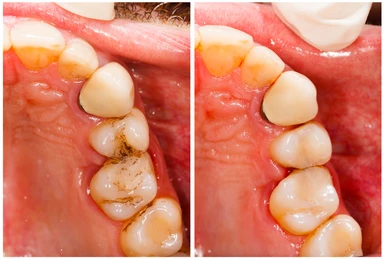
Filling materials
Types of dental fillings
The best filling depends on the size of the cavity, where the tooth is, how much bite pressure it takes and how you want it to look. Your dentist will explain the options that suit your situation.
Most common
Tooth-colored composite fillings
Composite is one of the most common choices today. It is matched to your natural tooth shade and blends into your smile.
- Natural appearance and metal-free
- Bonds directly to the tooth
- Preserves more healthy tooth structure
- Suitable for visible areas
Larger areas
Ceramic fillings
Ceramic restorations are often recommended for larger areas that need extra strength. They are custom-made and bonded to the tooth.
- Durable material
- Natural appearance
- Stain resistant and long-lasting
Specific uses
Glass ionomer fillings
Glass ionomer releases fluoride and is used in specific situations.
- Areas near the gumline
- Baby teeth
- Smaller restorations
Traditional
Metal fillings
Metal fillings have been used for many years because of their durability. Your dentist can talk through whether they, or a tooth-colored option, suit your goals.
If a cavity or an old filling is too large for a direct filling, your dentist may suggest an inlay or onlay or a crown instead.