
Introduction
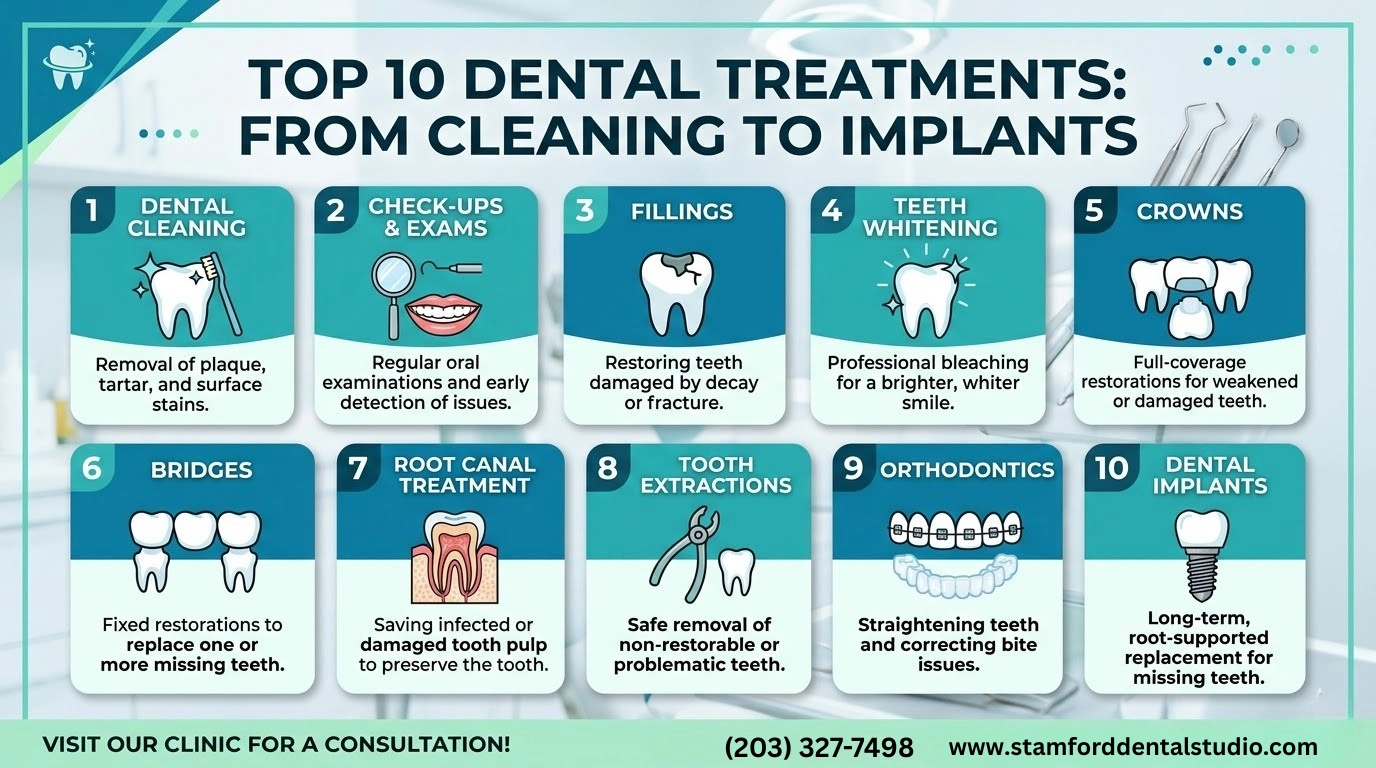
Having good oral health is not just important for having a beautiful smile, but it is also important for having good health overall. Today, dentistry offers a wide variety of treatments for preventing, diagnosing, and treating various oral health issues. These range from simple procedures like cleaning teeth to more complex options like implants. Exploring these options can make you feel curious and motivated to understand how each treatment can benefit your oral health. In this article, we will discuss the top 10 treatments available for oral health issues. We will discuss what these treatments are, why they are required, and how they can help you have better oral health.
Table of Contents
Top 10 Dental Treatments
1. Cleaning Your Teeth – A Professional Approach
A professional dental cleaning is one of the most important and common treatments provided by dentists to prevent oral health problems and maintain a healthy mouth. Professional cleans involve the removal of plaque and tartar, as well as stains that brushing and flossing alone cannot reach. A dental hygienist will perform the professional cleaning by using special instruments to thoroughly clean the surfaces of your teeth, as well as polishing your teeth at the end, which gives them a smooth surface. Dentists recommend professional dental cleansing at least every 6 months in order to prevent cavities (which can lead to gum disease), bad breath and other oral health conditions. In addition, professional cleanings enable dentists to identify early signs of dental issues. This simple, yet effective, procedure is performed frequently to provide patients with long-term dental health, along with a bright and healthy smile.
2. Dental Fillings
Dental fillings are dental procedures aimed at repairing teeth that are damaged by decay or minor cracks. If you notice tooth decay, your dentist will remove the decayed part of your tooth and then fill the space created by decay or damage using various dental materials, including composite resin, amalgam, and porcelain. Composite resin is widely preferred since it blends in seamlessly with your natural tooth color, making it almost impossible to notice your filled tooth. Dental fillings not only help repair your tooth but also help you avoid more complex procedures, such as root canals, by dealing with tooth decay on time. Dental fillings are a quick and efficient solution for maintaining your natural teeth.
3. Teeth Whitening
Teeth Whitening is a cosmetic dental procedure intended to improve the aesthetic quality of your smile by removing stains from your teeth. Your teeth may be stained due to the presence of coffee, tea, cigarettes, and age. Teeth Whitening is a process by which you can restore the color of your teeth by using strong teeth bleaching products. It is a fast process compared to the use of teeth bleaching products you buy from the store. Teeth Whitening is a great way to boost your self-confidence by improving your appearance.
4. Dental Crowns
Dental crowns are custom-made covers that are placed over damaged or weakened teeth to enhance their shape, strength, and appearance. Crowns are commonly used after root canal therapy, extensive fillings, or when a tooth has been cracked or significantly worn out. Crowns can be made of different materials such as porcelain, ceramic, metal, or a combination of these. Porcelain crowns are highly favoured because of their aesthetic properties. During a dental procedure, a tooth is prepared, impressions are taken, and a temporary crown is placed before the final crown is fabricated. Dental crowns offer durable protection and aid in maintaining the correct alignment of the bite.
Laser dentistry or traditional dental treatment? Explore the benefits, recovery time, and comfort level to find the best option for your dental care.
5. Root Canal Treatment
Root canal is a dental procedure that is usually employed for the purpose of saving a tooth that is severely infected or damaged. In some cases, a tooth is infected due to deep decay or trauma, and this infection in the pulp of the tooth usually leads to a great deal of pain and swelling. However, during a root canal procedure, the infected pulp is removed, and the tooth is cleaned and disinfected. A crown is usually fitted after a root canal. Root canal is a comfortable and successful procedure that allows you to retain your own tooth.
6. Tooth Extraction
Tooth extraction refers to the procedure of removing a tooth from the mouth that has been severely damaged, decayed, or impacted. Although dentists try to save a tooth whenever possible, there are some conditions under which tooth extraction becomes unavoidable. These conditions include tooth decay, infection, overcrowding, and impacted wisdom teeth. Tooth extraction can be simple or surgical, depending on the extent of the damage. Recovery time varies but typically takes a few days, during which proper aftercare such as avoiding certain foods and keeping the area clean is essential. Once the procedure is complete, you can opt for tooth replacements such as tooth implants or bridges. Tooth extraction, although unavoidable at times, can prove to be a blessing in disguise by relieving you of toothaches and helping you maintain good health.
7. Dental Implants
Dental implants are a permanent solution for tooth replacement. They consist of a titanium root that is surgically embedded into the jawbone, which acts as a sturdy foundation. A crown is then placed on top of this root, creating a tooth that looks, feels, and functions like a natural one. This approach helps prevent bone loss, stops teeth from shifting, and supports normal chewing. Although it takes a few months, it offers a reliable and long-lasting result.
8. Orthodontic Treatments (Braces & Aligners)
Orthodontic treatments help correct misaligned teeth and improper bites, giving teens and adults a chance to feel more confident and comfortable. Braces are traditional orthodontic treatments involving the use of metal brackets and wires. Clear aligners, which include invisible trays, provide an alternative option for those who prefer a non-traditional look and are removable for easier use. These treatments not only help you look better with a beautiful smile but also help you function better and make cleaning easier. Improperly aligned teeth may cause you problems such as jaw pain, uneven wear, and gum disease if not corrected. Orthodontic treatments are available for both teens and adults.
9. Dental Veneers
Dental veneers are thin, custom-made shells that are bonded to the front of the tooth to enhance its appearance. Dental veneers are best suited for correcting tooth color, chips, spaces, or uneven teeth. Veneers are usually made of porcelain or resin-based materials and are color-matched to blend in with the color of your teeth. This procedure requires minimal tooth preparation and offers immediate results in enhancing the appearance of your teeth. Veneers are highly durable and resistant to stains, thus offering you a long-lasting solution for a flawless smile. This procedure is best suited for people who seek a complete smile makeover with a natural look.
10. Gum Disease Treatment
Gum Disease Treatment: Gum disease is treated in a manner that aims to control and reverse periodontal disease. Periodontal diseases affect the supporting structures of the teeth and the gums. Gingivitis is the first stage of gum disease. Gingivitis can be treated with a professional cleaning and proper oral hygiene. Deep cleaning methods such as scaling and planing, or surgery, are required for advanced gum diseases. Symptoms of gum disease include bleeding gums, halitosis, and receding gum lines. If gum disease is not treated, it can cause tooth loss and health problems.
Benefits of Understanding Dental Treatments
Knowing about various dental treatments can make you feel more valued and motivated to take control of your dental health. It helps you identify the signs of various conditions at the right time. It also helps you avoid anxiety because you are aware of what is going to happen when you visit the dentist. Preventive care and the right treatment are time- and cost-efficient in the long run. Furthermore, being knowledgeable about the various treatment options allows you to discuss the best treatment plan for you with your dentist. Indeed, education is an essential factor in maintaining a healthy smile.
Learn how long dental implants last, what affects their lifespan, and tips to maintain them. Discover why implants are a long-lasting solution for missing teeth.
How to Choose the Right Dental Treatment
The type of dental treatment you need is based on your specific requirements, oral health condition, and desired outcome. You should discuss your personal preferences and concerns with a qualified dentist who can assess your individual situation and help you find the best possible treatment options. Considering all aspects such as cost, durability, aesthetics, and recovery time, along with your preferences, will lead to a more tailored approach. Communicating openly with your dentist allows you to understand both the advantages and disadvantages of each choice, so you can confidently participate in your dental care decisions.
Frequently Asked Questions (FAQs)
1. What is the most common dental treatment?
Professional dental cleaning is the most common treatment. It removes plaque and tartar, helping prevent cavities and gum disease.
2. Are dental treatments painful?
No, most dental treatments are not painful. Dentists use anesthesia to keep you comfortable during procedures.
3. How do I know which dental treatment I need?
You need a dental checkup. The dentist will examine your teeth and suggest the right treatment.
4. How long do dental treatments last?
It depends on the treatment. Fillings last years, crowns last over a decade, and implants can last a lifetime with proper care.
5. Are dental implants better than dentures?
Yes, implants are more stable and long-lasting. But the best option depends on your needs and budget.
Conclusion
Dental treatments have evolved significantly, and there are various treatments for functional and aesthetic issues. From routine dental cleaning to complex treatments such as implants, every dental procedure is essential for oral health and your beautiful smile. Regular dental visits, accompanied by oral hygiene, can help prevent several dental problems, thereby reducing the need for complex treatments. The following top 10 dental treatments will help you make informed decisions and focus on your dental health. A beautiful smile not only makes you feel confident but also contributes to your overall well-being.
