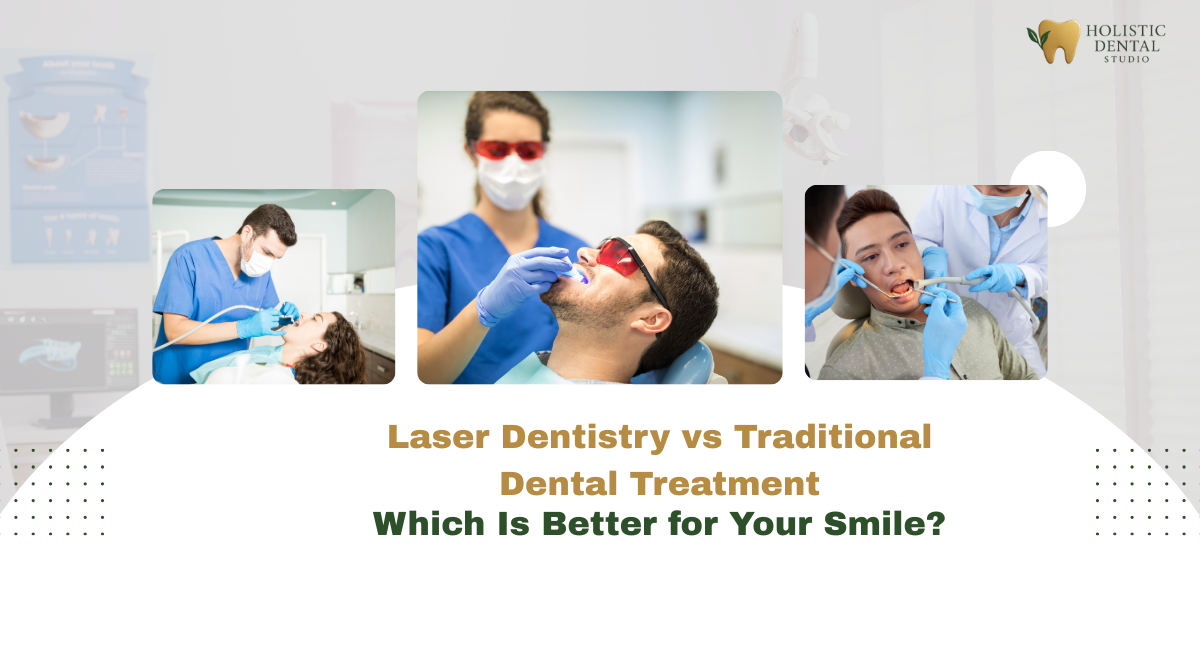
Dentistry has undergone a revolution over the past few decades. Patients today are able to access various advanced dental technologies that have made dental procedures faster, more comfortable, and more precise. One of the greatest advancements in dental care is laser dentistry, which is said to be similar to other dental procedures that use drills and scalpels.
This guide will provide you with insight into the differences between laser dentistry and traditional methods of dental treatment so that you may make an informed decision about your own dental treatment. The following blog will compare each type of treatment on the basis of comfort level, accuracy of results achieved, recovery period, level of success achieved with each treatment option, and overall patient satisfaction.
What Is Laser Dentistry?
Dentistry with lasers employs light beams to treat dental conditions. These light beams are used to remove decayed material from the tooth, reshape gums, sterilize infected areas, and perform other dental procedures that were previously carried out with surgical equipment.
Dental lasers are commonly used for:
- Cavity detection and treatment
- Gum disease treatment
- Gum reshaping (gum contouring)
- Teeth whitening
- Root canal disinfection
- Removing soft tissue lesions
The greatest advantage associated with dental procedures using lasers is that only the required area is targeted without harming any other tissue.
What Is Traditional Dental Treatment?
Traditional dental treatment refers to the conventional methods that dentists have been using over the years. These methods include dental equipment such as:
- Dental drills
- Scalpels
- Hand instruments
- Sutures (stitches)
Traditional dental treatment is still used today and is effective for dental procedures such as fillings, crowns, implants, and surgical procedures. However, these procedures are associated with some vibrations, pressures, and discomfort due to the mechanical equipment used.
Laser Dentistry vs Traditional Dentistry: Key Differences
Let’s compare the two approaches across several important factors.
1. Precision and Accuracy
One of the biggest advantages of laser dentistry is its incredible accuracy.
The use of laser technology enables dentists to remove diseased or damaged areas of the tooth without damaging the healthy areas.
Laser Dentistry
- Highly precise targeting
- Preserves healthy tissue
- Minimal damage to surrounding areas
Traditional Dentistry
- May remove more tissue than necessary
- Less precise compared to laser technology
For those patients seeking a more conservative approach in their dental care, laser dentistry offers a gentle and less invasive alternative that prioritizes your comfort and health.
2. Pain and Patient Comfort
Many people feel anxious about visiting the dentist because of the noise and sensation of drills. Laser dentistry helps ease these worries, making the experience more comfortable and less stressful.
The process of laser dentistry is less painful because of the lack of vibration, pressure, and noise associated with the drills, helping you feel more confident and at ease during treatment.
In many cases, laser treatments require little or no anesthesia, making the experience more comfortable for patients.
Laser Dentistry
- Less pain during procedures
- Often no need for anesthesia
- No loud drilling sounds
Traditional Dentistry
- May involve discomfort or vibration
- Often requires numbing injections
Patients who have dental anxiety or fear needles often prefer laser treatments.
3. Healing Time and Recovery
Recovery time is another major difference between these two methods.
Laser dentistry is less invasive, which means the treated area experiences less trauma. This leads to faster healing and shorter recovery periods.
Lasers cauterize blood vessels and nerve endings during treatment.
Laser Dentistry
- Faster healing
- Less swelling and bleeding
- Shorter downtime
Traditional Dentistry
- Longer recovery in some procedures
- More inflammation or swelling possible
Many patients can return to their normal activities within a day after laser procedures.
4. Risk of Infection
Another advantage of laser dentistry is the sterilization of the area being worked on.
The laser energy destroys the bacteria during the procedure. This helps prevent infection.
Laser Dentistry
- Sterilizes the treatment area
- Lower risk of bacterial infection
Traditional Dentistry
- Infection risk may be slightly higher without laser sterilization
This makes laser treatment particularly helpful for gum disease and periodontal therapy.
5. Bleeding and Swelling
Conventional surgical procedures in dentistry involve cutting gum tissue with scalpels, and this results in bleeding.
In laser dentistry, on the other hand, blood vessels are cauterized while working. This results in little bleeding.
Laser Dentistry
- Minimal bleeding
- Reduced swelling
Traditional Dentistry
- Bleeding may occur during gum procedures
This feature makes laser dentistry ideal for gum surgery, contouring, and periodontal treatments.
6. Versatility of Treatment
Laser dentistry can be used for both soft tissue and hard tissue procedures.
Examples include:
- Treating cavities
- Gum disease therapy
- Removing oral lesions
- Teeth whitening
- Root canal disinfection
Because of this versatility, lasers allow dentists to perform multiple treatments with one tool.
However, the traditional method of dentistry also has its importance in the following situations:
- Dental implants
- Crowns and bridges
- Complex oral surgeries
In most dental clinics, the two procedures are combined to yield the most effective outcomes.
Advantages of Laser Dentistry
Here are the biggest benefits of laser dental treatment:
✔ Minimal pain and discomfort
✔ Faster healing and recovery
✔ Reduced bleeding and swelling
✔ Lower risk of infection
✔ Greater precision and tissue preservation
✔ Less need for anesthesia
These advantages have made laser dentistry one of the most patient-friendly dental techniques available in the industry.
Potential Limitations of Laser Dentistry
Although laser dentistry offers many benefits, it’s not always the best option for every situation.
Some limitations include:
- Not suitable for very large cavities
- May not replace all traditional tools
- Equipment can be expensive
- Not every dental clinic offers laser technology
Because of these factors, dentists often combine laser technology with traditional methods depending on the treatment required.
When Traditional Dentistry Is Still the Best Option
Despite modern technology, traditional dentistry is extremely effective and widely practiced.
It is often preferred for:
- Dental implants
- Large fillings
- Crowns and bridges
- Complex restorative procedures
The tools of traditional dentistry offer dentists powerful mechanical precision that is sometimes necessary for structural work.
Which Treatment Is Right for You?
The choice between laser dentistry and traditional dentistry depends on various factors, including:
- Your dental condition
- The type of procedure required
- Your comfort level with dental treatments
- The technology available at your dental clinic
For some patients, laser dentistry can be a more pleasant and less invasive experience. However, the traditional methods are also important in more advanced treatments.
The best option would be to contact a professional dentist who can help in choosing the most suitable option based on individual needs.
The Future of Dentistry
Dental technology is advancing rapidly. Laser dentistry is one technology that marks a significant milestone in providing gentler, more efficient, and precise dental care.
As more dental practices adopt laser technology, patients can expect:
- Shorter appointments
- Less discomfort
- Faster healing
- Improved treatment outcomes
These advancements are changing the dental experience and helping people achieve healthy smiles with less stress.
FAQ
What is laser dentistry?
Laser dentistry utilizes laser light to treat dental issues (e.g., cavities, gum diseases & other soft tissue procedures) much more precisely than traditional methods while also reducing patient comfort level during treatments through the use of lasers.
Is laser dentistry better than traditional dental treatment?
Certain procedures may benefit from using lasers instead of traditional techniques as they generally cause less pain, heal more quickly, and produce less bleeding. Traditional methods remain necessary for some of these same types of procedures (e.g., placing implants and large restorations).
Is laser dental treatment painful?
Most laser dental procedures are painless or cause minimal pain compared to traditional methods of drilling. Some procedures can be done without the need for anesthetic injections.
What procedures can be done with laser dentistry?
The applications of laser dentistry include cavity treatment, gum reshaping, gum disease treatment, tooth whitening, disinfection of roots during canal treatment, and removal of oral lesions.
Is laser dentistry safe?
Yes, laser dentistry is considered safe as long as a dentist is using the laser. Dental lasers have been approved for use in various dental procedures because of their precise use with minimal destruction of tissues.
Does laser dentistry heal faster?
Yes, laser dentistry helps in quick healing because it is a minimally invasive procedure with minimal damage and no bleeding or swelling.
Final Thoughts
Both traditional and laser dentistry have their qualities and benefits. Laser technology provides exceptional comfort, precision, and the potential for faster healing, which will make it a viable option for many procedures. As well, traditional dentistry remains a valid option for more complex dental procedures.
Ultimately, the right option will depend on the need for the type of dental work you require and a qualified dentist’s skill level. By discussing your treatment options with a qualified professional, you’ll be able to select which approach will achieve the best results for your smile.
