
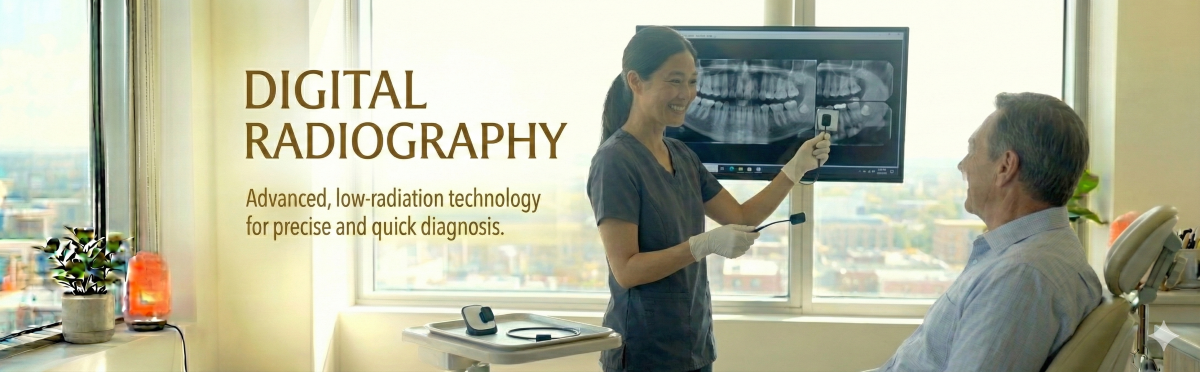
Digital radiography represents one of the most significant technological advancements in modern dentistry. Unlike film-based X-rays, digital X-rays/substitutes use computer-generated imaging, which has greatly enhanced the accuracy of diagnosing oral diseases, the safety of patient treatment, and the overall efficiency of X-ray diagnosis. Digital X-ray technology offers a range of advantages, including fast image processing, high-quality images, and reduced environmental impact. It is now considered the standard of care for forward-thinking dental practices.
What Is Digital Radiography?
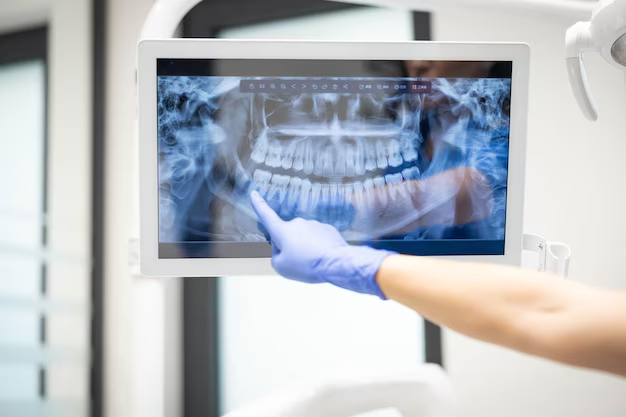
Digital X-rays are produced using modern computerized equipment and electronic receptors to obtain highly detailed images of the teeth, jawbone, and tissues in the oral cavity. Instead of using photochemical film to create a photo, a small electronic receptor is inserted into the mouth, where it captures an image of the area. The radiographic image is immediately sent to a computer and can be displayed, enlarged, amplified, and saved in the patient’s electronic medical record.
This is because it enables dentists to immediately view the images taken and discuss the results with the patient. The ability to enlarge and adjust contrast also enables dentists to identify issues that may not be easily visible on traditional film X-rays.
Reduced Radiation Exposure
A major advantage of using digital radiography is that it produces significantly lower radiation levels than traditional film X-Rays. While many other things in the world use radiation, such as medical imaging, computers, and televisions, the amount of radiation involved is typically much lower when using digital systems than it would be to produce a picture.
Digital radiography systems generally use less radiation to produce high-quality images. They are therefore safer for people of all ages, including kids and individuals requiring more persistent follow-up care.
The dental community remains committed to the ALARA principle (As Low As Reasonably Achievable), which means radiation exposure is kept at the lowest level necessary for proper diagnosis. Digital technology helps the dental community achieve this by providing excellent image quality at lower radiation levels.
Instant Image Viewing and Improved Diagnosis
With conventional X-rays, patients had to wait while pictures were developed. Digital radiography does not have this problem. Pictures are viewed on a computer screen almost instantly, and the dentist can view the results immediately.
The advanced visualization capabilities of digital imaging also enhance diagnostic power. The dentist can zoom in on a particular area, enhance brightness and contrast, and view current and previous images simultaneously.
This makes it easier to identify:
-
Early-stage cavities
-
Bone loss associated with gum disease
-
Infections at the root of a tooth
-
Impacted teeth
-
Cracks or fractures
-
Developmental abnormalities
Because images are clearer and more detailed, potential problems can be identified earlier, and treatment can be more conservative and effective.
Seamless Storage and Sharing
Another major benefit of digital radiography is the efficient storage and retrieval of images. Images are automatically stored in the patient’s electronic file. There is no need for storage space, film envelopes, or paper charts.
Patients’ records can also be communicated electronically to specialists, insurance companies, and any dental office when necessary. If a patient is referred to an oral surgeon/orthodontist or another specialist, the records/images/documents can be sent electronically. This improves communication between providers and better coordinates comprehensive care.
Images can be shared/seen (simultaneously) both chairside and in a consultation room by multiple practitioners. This will support each other during treatment planning and also aid in educating the patient.
Environmentally Friendly Technology
In traditional film X-ray imaging, chemical developers and fixers are required, along with water for processing. The chemicals used in the process must be handled and disposed of to prevent environmental contamination.
Digital radiography does not require any chemical processing. Since there is no film, there is no need for developers or paper, so digital radiography has a lower environmental impact. The use of digital imaging in dental practices helps create a sustainable, eco-friendly healthcare environment.
How the Digital X-Ray Process Works
Digital X-ray procedures are quick and hassle-free! You will place a smaller-sized electronic sensor in your mouth during the process, rather than biting on a film packet. This electronic sensor communicates with the dental office computer system to quickly provide highly detailed anatomical images.
Once the radiograph has been taken, it will automatically appear on the dentist’s computer screen within seconds. The dentist can then digitally magnify or modify the image to view any areas requiring closer evaluation. If necessary, the digital images can be printed and securely sent to other healthcare providers.
Enhancing Patient Education
Digital radiography is also a significant part of patient understanding and participation. By viewing high-resolution images of their own teeth and bone structure on a screen, patients can better understand diagnoses and treatment plans.
The dentist can use these images to highlight areas of concern, illustrate the development of a cavity, or show bone changes associated with periodontal disease. This allows the patient to make informed decisions about their own care.
A Modern Standard of Care
With the ever-advancing field of dentistry, digital radiography will always be at the forefront of modern dental diagnosis. Digital radiography brings together safety, efficiency, and environmental responsibility into one system.
With computer technology and digital sensors, dental practices can now offer faster, clearer, and safer imaging than ever before. This is especially important for patients who can now receive reduced radiation exposure, immediate results, better communication, and a more comfortable experience.
Digital radiography is a sign of modern dentistry’s commitment to providing high-quality care while ensuring that patient safety and environmental responsibility are at the forefront.