Having one less tooth does not sound like much of a problem, especially if this tooth does not show when smiling. Most people think that having one missing tooth will not have any repercussions at all. But the truth is far from it. Having a missing tooth does more than harm the aesthetics of your teeth. It sets off a chain reaction of dental problems that become worse with time.
This article will give an explanation of the exact things that happen when someone has a missing tooth and does not replace it.
Table of Contents
Understanding Tooth Loss: More Than Just a Gap
If you lose a tooth because of cavities, periodontal problems, or trauma, it will affect more than just the vacant spot. The teeth, the jawbone, and the gums interact as a team. Each tooth contributes to ensuring that everything stays aligned, that you have the right bite, and that the bone underneath is stimulated.
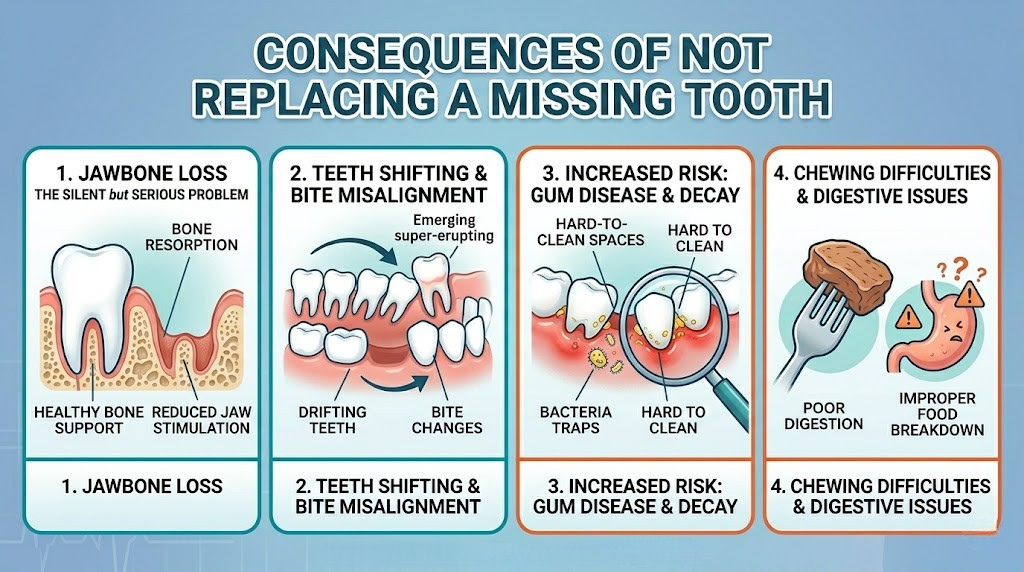
Once a tooth is missing, this balance is disrupted. The surrounding teeth begin to shift, the jawbone starts to shrink, and your bite can become uneven. These changes don’t happen overnight—but they do happen progressively, often without noticeable symptoms in the early stages.
Jawbone Loss: The Silent but Serious Problem
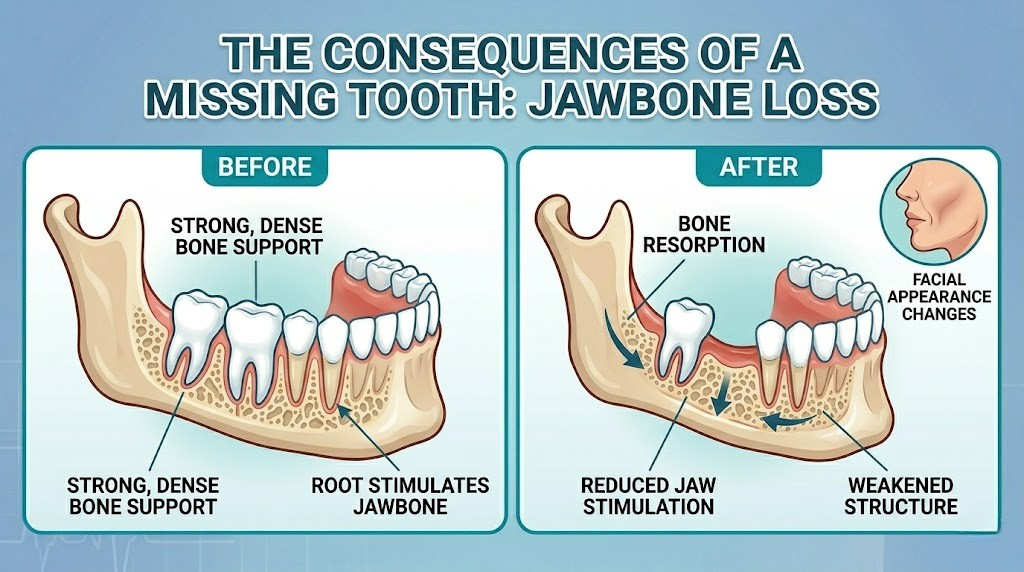
One of the direst effects associated with a missing tooth is jawbone loss or bone resorption. The root of the tooth sends signals to your jawbone whenever you chew. These help to ensure that the jawbone is healthy and strong.
With the loss of the tooth, there will no longer be any signals sent to the jawbone in the area. It will then begin breaking down due to the lack of use.
According to research, a person may lose up to 25% of bone density in the first year after losing a tooth. This can eventually cause a dramatic change in one’s facial structure.
The loss of bone will affect both the individual’s appearance and any treatments done in the future, including implants. Some patients will have to undergo other procedures, like bone grafts, before treatment can occur.
Teeth Shifting and Bite Misalignment
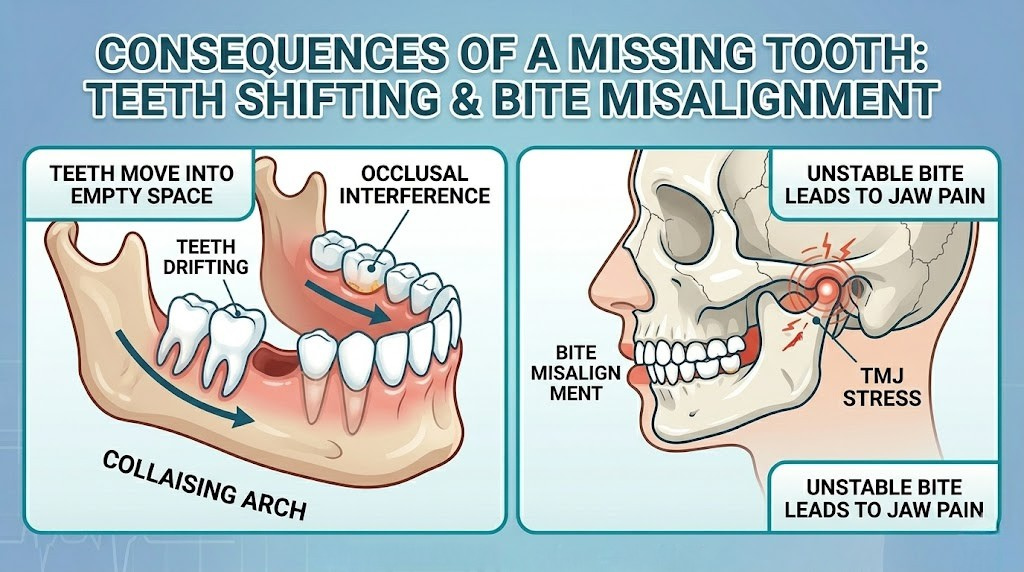
The strength of your teeth depends on their alignment with one another. If you have a gap between your teeth, then those surrounding the gap start to move closer to fill the gap. While this might not be obvious in the beginning, over time, the shifting causes misalignment.
With the misalignment, there is a chance that your bite will become unbalanced. The situation where your teeth do not align when biting down is called malocclusion. Malocclusion results in extra pressure being exerted on some parts of your mouth.
Misaligned teeth can be difficult to keep clean. Because of this, they are more likely to develop cavities. Some situations involving misalignment might require orthodontic treatment along with dental implants to fix.
Increased Risk of Gum Disease and Tooth Decay
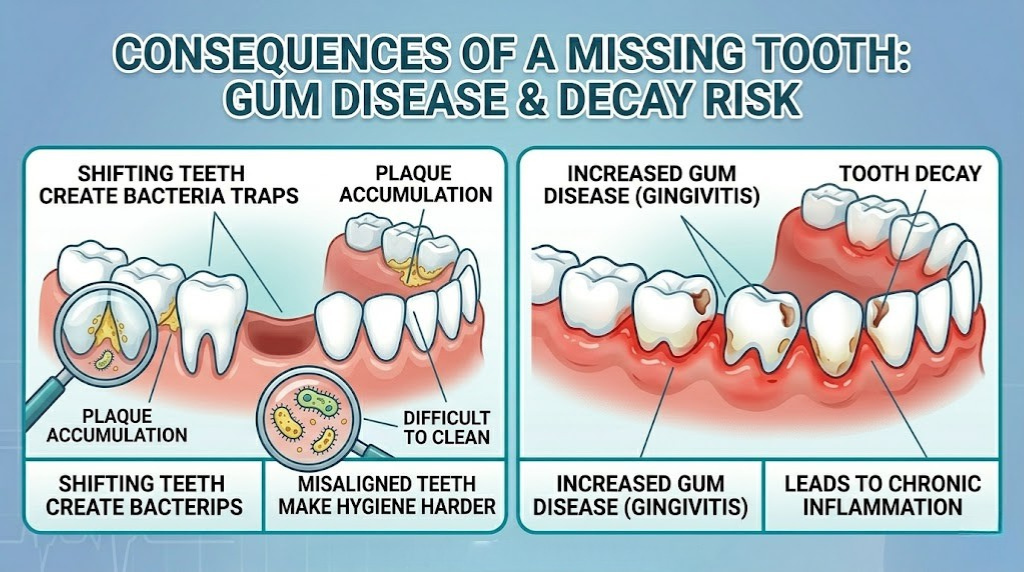
The gap caused by the loss of a tooth provides a place for food debris and bacteria to settle. This space is hard to reach during normal cleaning activities such as brushing and flossing, making it prone to plaque accumulation.
This eventually results in the development of gingivitis, a condition that may advance to more severe periodontitis if not checked. The problem with gum disease is that it affects the surrounding bone structure, leading to bone loss around the remaining teeth.
Furthermore, as the teeth become crowded due to shifting, they tend to form tight spots where bacteria can accumulate, resulting in tooth decay. This explains why patients who have lost a tooth usually end up losing more.
Chewing Difficulties and Digestive Issues
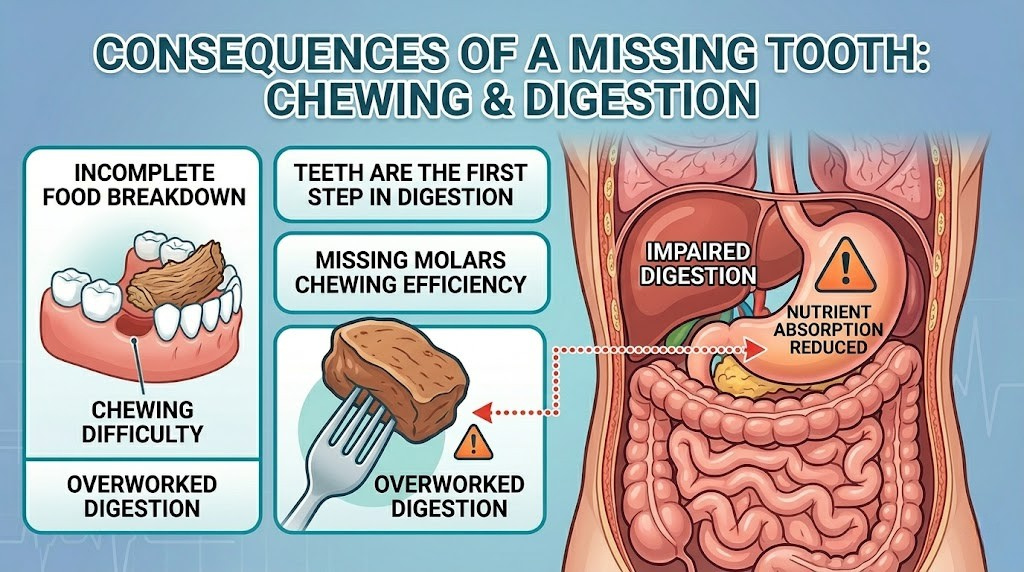
Each tooth has its own job to perform when grinding food. Having even one missing tooth, particularly a molar, will have a great effect on your ability to chew your food well.
You might start eating on just one side of your mouth, or avoid some types of foods entirely. This may result in wearing your teeth out unevenly and putting more strain on the jaw muscles.
Chewing problems may also have an adverse effect on the body’s digestion. If the food is not thoroughly chewed in the mouth, it may cause difficulties in digesting it.
Facial Changes and Premature Aging
Your teeth are vital to the structural integrity of your face. Without your teeth and any bone loss, the support that you have from your teeth starts to erode.
This will give you the following signs:
Sinking cheeks
Slimming lips
Additional lines around your mouth
All these will give you an aged appearance. Apart from changes to your appearance, lack of teeth also affects one’s self-confidence negatively.
Jaw Pain, TMJ Disorders, and Headaches
When you develop an uneven bite from losing your teeth, you end up overworking your TMJ joints because of this imbalance. The strain that occurs can bring about other problems.
Symptoms of TMJ disorders include:
Pain and stiffness in the jaw joints
Audible clicking sound when you open your mouth
Regular headaches
Neck and shoulder tension
It’s important not to ignore such TMJ disorders because they will affect your life greatly.
Speech Problems and Communication Challenges
The loss of teeth, especially the front teeth, makes it harder for you to pronounce some words properly. Pronouncing some letters like “S,” “F,” and “Th” requires the correct position of the teeth.
Even a small space between the teeth can affect how you pronounce your words. This may not be a serious problem; however, it affects your confidence when speaking to others.
Why Early Treatment Makes a Big Difference
Many individuals tend to postpone replacement for their missing teeth because of costs, fears, or the lack of urgency. But in most cases, early intervention will always be easier and cheaper compared to procrastination.
If you act promptly:
There will be minimal bone loss
Your teeth will stay aligned
The treatment process becomes easier
Postponing treatment usually results in more procedures, including bone grafts, orthodontic treatment, Dental treatment and other restoration methods.
Best Options to Replace a Missing Tooth
Today, there are a number of solutions available to help address this problem. Your dentist will be able to help you find the right solution depending on your particular needs.
Dental implants represent the most preferred solution as they can restore both the tooth itself and its root. This type of treatment helps maintain bone and offers excellent aesthetics.
Bridges are another possible way to solve this problem. These devices serve to connect gaps between several teeth, and thus, this solution takes less time.
Removable dentures are a cheaper and faster way to restore several missing teeth.
During your visit to the dentist, you should talk about all the options.
Frequently Asked Questions
How long can you go without replacing a missing tooth?
While you can go years without replacing it, damage such as bone loss and shifting can begin within months.
Is it okay to leave a back tooth missing?
No. Back teeth are essential for chewing and maintaining proper bite alignment.
What is the best replacement option?
Dental implants are typically the most effective and long-lasting solution.
Does replacing a tooth improve overall health?
Yes. It improves chewing, digestion, and helps prevent further oral health issues.
Final Thoughts:
A missing tooth may appear to be a small problem, but its implications can prove to be very serious if they are not dealt with. This ranges from the loss of bone structure and movement of teeth to gingival issues and facial deformations, causing both oral problems and affecting your general state.
The positive aspect about this is that it is completely avoidable. By using modern dental solutions, you can have a healthy mouth and avoid any complications in the future.
